Founded with a mission to fundamentally change how autoimmune diseases are treated, this company was established to bring the curative potential of cell therapy beyond oncology and into immune-mediated disorders that impose lifelong suffering on patients. Built by leaders with deep experience in immunology, translational science, and CAR T development, the organization was designed from the outset to tackle diseases where the immune system itself becomes the primary driver of damage. Rather than relying on chronic immunosuppression or symptom management, its founding vision centers on developing cell therapies capable of resetting immune dysfunction at its source, with the goal of delivering durable remission after a single treatment.
Kyverna Therapeutics (NASDAQ:KYTX) operates as a clinical-stage biopharmaceutical company focused on developing cell therapies for autoimmune diseases, a field that has historically lagged behind oncology in access to transformative treatments. Kyverna Therapeutics Inc has built its scientific platform around CAR T cell therapy, adapting and refining this approach to address autoimmune disorders such as lupus nephritis, generalized myasthenia gravis, stiff person syndrome, multiple sclerosis, and systemic sclerosis. These diseases affect patients living with severe physical limitations, including muscle stiffness, progressive weakness, and organ damage, often requiring lifelong therapy that creates a significant chronic treatment burden.
The company’s background is closely tied to its emphasis on patient-centered innovation. Kyverna Therapeutics has consistently framed its research and clinical development strategy around the lived experience of patients, many of whom cycle through approved therapies without achieving sustained disease control. By focusing on autologous CD19 CAR T cell therapy, the company aims to eliminate pathogenic immune cells that drive autoimmune disorders, thereby offering the possibility of unprecedented clinical benefit compared to existing treatments. This approach represents a meaningful departure from traditional therapies that require continuous dosing and expose patients to long-term side effects.
Kyverna Therapeutics’ pipeline has been shaped by this philosophy, with its lead product candidate miv-cel, also known as mivocabtagene autoleucel or KYV-101, positioned as a potential cornerstone therapy across multiple autoimmune indications. The company’s clinical development efforts have focused on designing trials that can demonstrate not only safety but also the ability to significantly reduce or eliminate disease activity following a single dose. This strategy reflects a broader ambition to transform the treatment paradigm for autoimmune disorders, moving from chronic management to immune system reprogramming.
As a development-stage company, Kyverna Therapeutics has invested heavily in clinical trials, manufacturing capabilities, and regulatory infrastructure to support complex autologous cell therapy programs. Its background includes building the operational expertise required to scale CAR T therapies outside of cancer, a challenge that involves precise cell processing, quality control, and close coordination with clinical sites. This operational focus has become increasingly important as the company advances toward later-stage trials and registrational pathways.
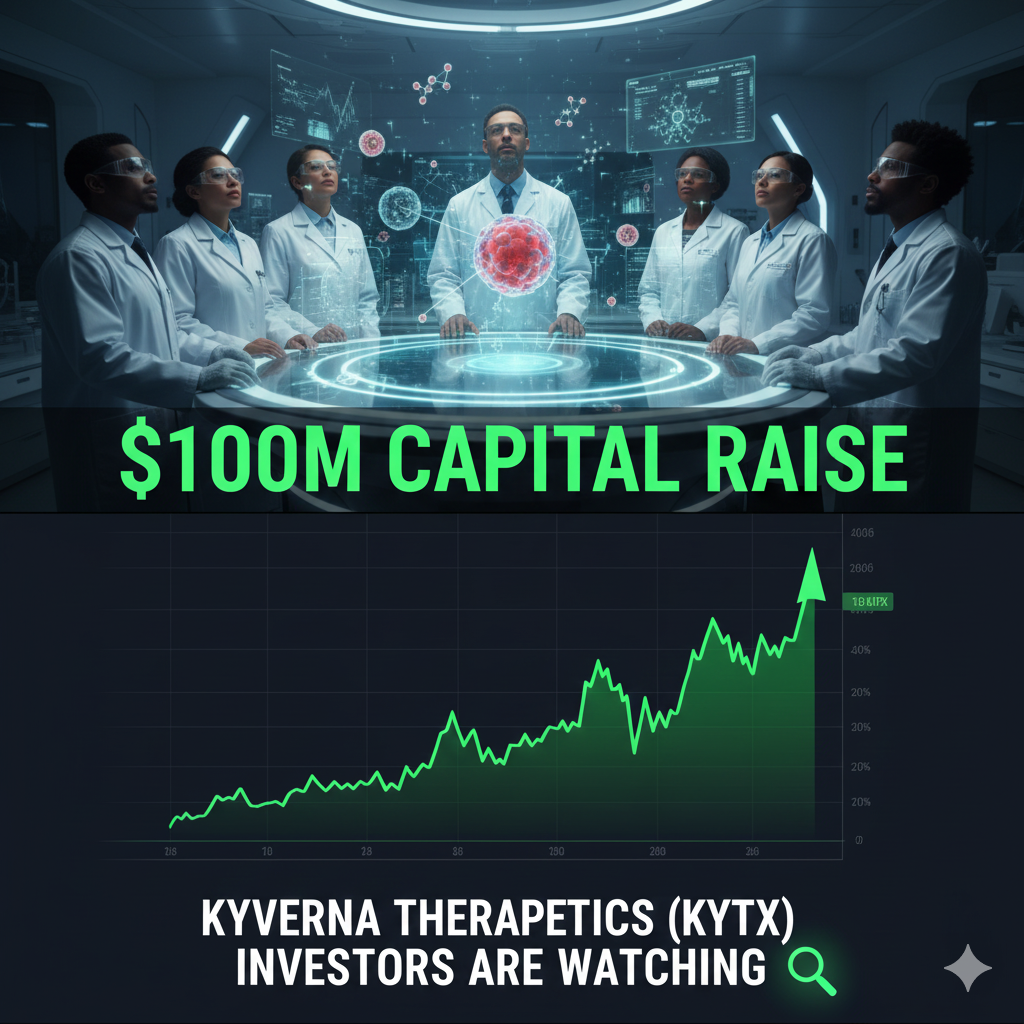
Financially, Kyverna Therapeutics has taken deliberate steps to support its long-term strategy. The company strengthened its balance sheet through a sizable equity offering in late 2025, raising approximately $100 million in gross proceeds. This capital provides the resources needed to advance clinical trials, expand development programs, and support the infrastructure required for future registrational studies. For a clinical-stage biopharmaceutical company, this financial foundation is a critical component of sustaining momentum through data-driven inflection points.
Within the broader market, Kyverna Therapeutics has positioned itself at the intersection of two powerful trends: the rapid evolution of cell therapies and the growing recognition that autoimmune diseases require more effective, durable solutions. While CAR T therapy is already established in cancer, its application to autoimmune disorders remains an emerging frontier. Kyverna Therapeutics’ early focus on this space has allowed it to build scientific credibility and clinical experience ahead of many potential competitors.
Today, Kyverna Therapeutics Inc stands as a company defined by its background in immune system science, its commitment to reducing chronic treatment burden, and its ambition to deliver transformative therapies for rare and severe autoimmune diseases. As its clinical programs mature and data continue to emerge, the company’s origins as a patient-driven, innovation-focused developer of cell therapies remain central to its identity and long-term vision.
Kyverna Therapeutics Inc Positions Itself at the Center of a New Era in Autoimmune Cell Therapy
Kyverna Therapeutics, Inc. has emerged as one of the most closely watched clinical-stage biopharmaceutical companies in the rapidly evolving field of cell therapies for autoimmune diseases. Headquartered in Emeryville, California, Kyverna Therapeutics Inc is focused on developing cell therapies that aim to fundamentally reset the immune system rather than manage symptoms through lifelong drug regimens. This patient-centered approach is designed to eliminate the chronic treatment burden faced by patients living with severe autoimmune disorders, a burden that often involves daily immunosuppressive drugs, repeated infusions, and long-term side effects that degrade quality of life.
Kyverna’s scientific foundation is rooted in adapting CAR T cell therapy, a modality historically associated with cancer treatment, to autoimmune diseases. By repurposing and refining CAR T cell approaches, Kyverna seeks to deliver what it describes as unprecedented clinical benefit through single-dose, potentially curative therapies. This strategy places the company at the intersection of immunology innovation and unmet medical need, a combination that has increasingly attracted investor attention in the biotech market.
CHECK THIS OUT: Corcept (CORT) Skyrockets 1,534% in 10 Years and Immuneering (IMRX) Reports 86% 9-Month Survival in Pancreatic Cancer.
A Clinical-Stage Biopharmaceutical Company Focused on Autoimmune Diseases
Kyverna Therapeutics operates as a clinical stage biopharmaceutical company with a clear and differentiated mission: to develop cell therapies that can transform the treatment paradigm for autoimmune disorders. Unlike approved therapies that suppress immune activity indefinitely, Kyverna’s approach targets pathogenic immune cells directly, with the goal of significantly reducing or even eliminating disease activity after a single dose. This vision is particularly compelling in diseases where patients face decades of treatment and progressive disability.
The company’s development pipeline focuses on severe and underserved autoimmune diseases, including lupus nephritis, generalized myasthenia gravis, stiff person syndrome, multiple sclerosis, and systemic sclerosis. These conditions share a common feature of immune system dysfunction, where B cells play a central role in driving disease pathology. Kyverna’s strategy leverages CD19 CAR T cell therapy to selectively deplete these pathogenic B cells, thereby addressing disease at its source rather than managing downstream symptoms.
KYV-101 and miv-cel Highlight the Potential of Autoimmune CAR T Therapy
At the center of Kyverna’s bullish thesis is its lead product candidate, miv-cel, also known as mivocabtagene autoleucel or KYV-101. This autologous CD19 CAR T cell therapy is designed to treat autoimmune disorders by resetting immune function. Early clinical data and investigator-initiated trials have highlighted miv-cel’s potential to deliver durable responses across multiple autoimmune indications, reinforcing confidence in its clinical development strategy.
Kyverna has emphasized that miv-cel’s potential lies in its ability to provide unprecedented clinical benefit while significantly reducing the chronic treatment burden that defines current standards of care. In best case scenarios observed in early data, patients have experienced meaningful disease remission following a single dose, an outcome that would represent a paradigm shift in autoimmune disease management if replicated in larger trials.
The company has outlined plans to advance miv-cel into registrational trials, with expectations that pivotal data could emerge as early as the first half of upcoming development cycles. These trials are designed to address diseases such as lupus nephritis and generalized myasthenia gravis, where existing approved therapies often fail to deliver sustained remission.
Clinical Trials, Data Readouts, and Market Confidence
Clinical trials remain the most important value drivers for Kyverna Therapeutics, and the market has closely followed updates related to its CAR T therapy programs. Data presentations and conference call updates have consistently highlighted the potential of miv-cel to deliver meaningful clinical responses with manageable safety profiles. The ability to significantly reduce muscle stiffness in stiff person syndrome or improve neuromuscular function in myasthenia gravis has reinforced the thesis that CAR T cell therapy can be extended beyond oncology into autoimmune disease.
Importantly, Kyverna’s approach targets diseases that affect relatively small patient populations but carry high unmet need, classifying many as rare disorders. This positioning not only supports premium pricing potential but also aligns with regulatory frameworks that may offer expedited review pathways. In autoimmune diseases where patients face progressive disability and limited options, even modest patient numbers can translate into substantial market opportunities.
Financial Strength Bolstered by $100 Million Capital Raise
A key element supporting Kyverna’s bullish outlook is its strengthened balance sheet. In December 2025, Kyverna Therapeutics announced the pricing of an underwritten public offering of 13,333,333 shares at $7.50 per share, generating approximately $100 million in gross proceeds before expenses. This capital infusion materially extends the company’s runway and supports continued clinical development across multiple programs.
The offering, led by major financial institutions including J.P. Morgan, Leerink Partners, Morgan Stanley, and Wells Fargo Securities, reflects institutional confidence in Kyverna’s strategy and long-term potential. The availability of capital is particularly important for a clinical-stage company pursuing complex autologous cell therapies, which require significant investment in manufacturing, clinical operations, and regulatory engagement.
With this funding, Kyverna plans to expand clinical trials, support registrational studies, and potentially create more jobs across its development and manufacturing functions. This financial stability reduces near-term dilution risk and allows management to focus on execution rather than survival, a critical distinction in early-stage biotech investing.
Addressing Autoimmune Disorders With a Patient-Centered Vision
Kyverna’s patient-centered philosophy underpins its entire development strategy. The company consistently emphasizes the lived experience of patients with autoimmune diseases, many of whom endure lifelong therapy with incomplete disease control. By aiming to eliminate chronic treatment burden, Kyverna positions its CAR T therapy platform as transformative rather than incremental.
Diseases such as lupus nephritis and systemic sclerosis are associated with significant morbidity, healthcare utilization, and reduced life expectancy. Current treatments often involve steroids, immunosuppressants, or biologics that require continuous administration. Kyverna’s single-dose approach, if validated in registrational trials, could dramatically alter both clinical outcomes and healthcare economics.
Market Opportunity and Competitive Landscape
The broader market for autoimmune disease therapies is vast and growing, driven by improved diagnosis rates and increased awareness. However, truly disease-modifying therapies remain scarce. Kyverna’s focus on CAR T therapy for autoimmune disorders differentiates it from competitors developing incremental biologics or small molecules. While competition exists, particularly from other cell therapy developers, Kyverna’s early focus and expanding clinical dataset provide a first-mover advantage in several indications.
From an equity perspective, Kyverna Therapeutics Inc trades under the ticker KYTX and remains firmly in the category of development-stage biotech stocks where valuation is driven by data, execution, and future potential rather than current revenue. As clinical milestones are achieved and registrational trials advance, investor perception may shift from speculative to fundamentally driven, particularly if data continue to support claims of unprecedented clinical benefit.
Why the Bullish Thesis for Kyverna Therapeutics Inc Remains Intact
The bullish thesis for Kyverna Therapeutics Inc rests on several reinforcing pillars: a differentiated CAR T cell therapy platform adapted for autoimmune diseases, a lead product candidate with compelling early data, a strengthened balance sheet following a $100 million capital raise, and a clear focus on eliminating chronic treatment burden for patients living with severe autoimmune disorders. With multiple clinical trials underway and plans to advance miv-cel into registrational studies, Kyverna stands at a critical inflection point.
While risks remain inherent to all clinical-stage biopharmaceutical companies, including trial outcomes and regulatory uncertainty, Kyverna’s strategy targets diseases with high unmet need and limited effective therapies. In a market increasingly receptive to transformative treatments, Kyverna Therapeutics Inc represents a high-conviction, science-driven opportunity within the evolving cell therapy landscape.
READ ALSO: Tiziana (TLSA) Surges 143% in 2025 and Immuneering (IMRX) Reports 86% 9-Month Survival in Pancreatic Cancer.