We recently published our article 10 Best Biotechnology Stocks to Buy Now With More Than 50% Upside Potential. In this article, we take a closer look at Legend Biotech (NASDAQ:LEGN) and explore why the company has emerged as one of the biotechnology stocks attracting growing investor interest.
Biotechnology Is Once Again At a Crossroads
For investors who have spent years following the biotechnology sector, one pattern becomes unmistakably clear: biotech rarely moves in a straight line. The industry is famous for its dramatic swings between skepticism and optimism, between scientific breakthroughs and regulatory setbacks. Yet historically, some of the most profitable investment opportunities have emerged precisely during these uncertain phases when sentiment is fragile and valuations temporarily disconnect from long-term scientific progress. In many ways, biotechnology stocks represent the ultimate intersection of finance and discovery. A single successful therapy can transform not only a company’s balance sheet but also the lives of millions of patients around the world. That powerful combination of medical innovation and financial potential is exactly why biotech continues to attract both institutional investors and retail traders searching for the next major growth story.
The year 2025 proved once again that biotechnology is a sector defined by resilience. Despite volatile market conditions, tightening capital markets, and increasing regulatory scrutiny, the biotechnology industry continued to produce meaningful scientific advances. Gene editing technologies continued to mature, immuno-oncology therapies expanded into new indications, and next-generation drug delivery platforms improved the effectiveness of treatments that were once limited by how they could be administered. Even in a year filled with macroeconomic uncertainty, biotech companies continued pushing the boundaries of modern medicine.
A Sector That Thrives on Innovation and Uncertainty
Few industries rely on innovation as heavily as biotechnology. Unlike many traditional sectors where incremental improvements drive growth, biotech operates in an environment where breakthroughs can completely redefine entire therapeutic categories. The development of monoclonal antibodies decades ago reshaped cancer treatment. More recently, mRNA technologies proved capable of delivering vaccines in record time, demonstrating how scientific innovation can rapidly transform healthcare.
But with this innovation comes uncertainty. Drug development remains one of the most complex and capital-intensive processes in the global economy. From early laboratory research to clinical trials and regulatory approval, the path to commercialization can take more than a decade and cost billions of dollars. Even then, success is never guaranteed. A failed Phase III clinical trial or an unexpected regulatory delay can erase years of progress and dramatically impact a company’s valuation overnight.
This is why biotechnology stocks have long been known for their volatility. The same factors that create risks also generate opportunity. When biotech companies succeed, the rewards can be extraordinary. A single successful therapy addressing a major disease category can generate billions in annual revenue, turning relatively small biotech firms into industry leaders almost overnight. Investors who identify promising biotech platforms early in their development cycle often find themselves positioned ahead of massive valuation expansions.
The Industry’s Next Chapter: Biopharma Trends in 2026
To better understand where the biotechnology industry may be headed next, many analysts have turned to recent industry research. In early January, Boston Consulting Group released a detailed report titled “Biopharma Trends 2026,” outlining the structural shifts reshaping the pharmaceutical and biotechnology landscape. According to the report, one of the most significant changes taking place across the industry involves how companies allocate research and development spending.
Biotechnology companies are increasingly prioritizing therapies that address large patient populations while also demonstrating clear real-world clinical benefits. In other words, drug developers are focusing not only on breakthrough science but also on therapies that can scale commercially and deliver measurable healthcare outcomes. This shift reflects the growing pressure on pharmaceutical companies to justify pricing structures while ensuring that treatments produce meaningful benefits for patients and healthcare systems alike.
Another major trend highlighted in the report involves the increasing role of artificial intelligence in drug discovery and development. AI-driven research platforms are already helping scientists analyze vast biological datasets, identify potential drug targets faster, and predict clinical outcomes with greater accuracy. These tools are gradually transforming the way biotechnology companies approach the discovery process, potentially shortening the timeline between early research and commercial drug launches.
The Coming Wave of Biotech Mergers and Acquisitions
One of the most important forces shaping the biotechnology investment landscape today is the expected surge in mergers and acquisitions across the biopharmaceutical sector. Large pharmaceutical companies are approaching what analysts often call the “patent cliff,” a period when several blockbuster drugs begin losing exclusivity protection. When that happens, generic competition can rapidly erode billions of dollars in annual revenue.
To offset these looming revenue losses, major pharmaceutical companies frequently turn to acquisitions and licensing agreements with innovative biotech firms. This strategy allows large pharmaceutical companies to quickly expand their pipelines by integrating promising drug candidates that are already in development. As a result, small and mid-cap biotechnology companies often become attractive takeover targets once their clinical data begins to demonstrate meaningful therapeutic potential.
Industry observers believe that the next several years could see a substantial increase in biotech deal activity as pharmaceutical companies deploy capital to secure future growth. In past cycles, acquisition announcements have often triggered dramatic price surges in biotechnology stocks, rewarding investors who identified promising companies early in their development stages.
Why Volatility Can Create Opportunity for Investors
The biotechnology sector’s volatility is not merely a byproduct of scientific uncertainty—it is also an integral part of how innovation is priced in financial markets. Investors constantly evaluate the probability that a company’s clinical pipeline will succeed, adjusting valuations as new trial results, regulatory decisions, and partnership announcements emerge.
This dynamic often creates periods when biotech stocks appear undervalued relative to their long-term potential. Market sentiment may temporarily shift toward caution after a failed trial in one segment of the industry, causing valuations across the broader biotech sector to compress. Yet historically, these periods of pessimism have frequently preceded major rallies once new scientific breakthroughs or regulatory approvals restore investor confidence.
For experienced investors, these cycles represent opportunities to identify biotechnology stocks with significant upside potential before broader market enthusiasm returns. Companies with strong intellectual property, differentiated therapeutic platforms, and credible development pipelines can sometimes trade at valuations that underestimate their long-term revenue potential.
Searching for Biotech Stocks With More Than 50% Upside
Against this backdrop, analysts and investors are increasingly searching for biotechnology stocks that combine scientific innovation with attractive valuation profiles. In particular, companies that have advanced clinical pipelines, strategic partnerships with major pharmaceutical firms, or unique technological platforms often attract attention as potential high-growth investment candidates.
Using consensus analyst estimates and financial screening tools, several biotechnology companies currently stand out as having particularly compelling upside potential. By focusing on U.S.-listed biotech firms with market capitalizations above $2 billion and share prices above $5, analysts were able to identify companies with sufficient scale and liquidity to attract institutional investor interest.
From that universe, stocks were further evaluated based on TipRanks consensus price targets as of the February 12 market close. Only companies with projected upside potential exceeding 50% were included in the final list. This approach highlights biotechnology firms whose current valuations may not fully reflect the long-term potential of their drug pipelines, technology platforms, or commercial partnerships.
Exploring the Biotech Stocks With the Biggest Potential Gains
The result is a curated group of biotechnology companies that analysts believe could deliver significant appreciation if their clinical programs, regulatory milestones, or strategic initiatives unfold as expected. While every biotech investment carries inherent risks, the companies featured in this list have attracted attention due to their strong growth narratives, innovative technologies, and the possibility of transformative catalysts ahead.
With that context in mind, the following section explores 10 biotechnology stocks with more than 50% upside potential, ranked according to analyst projections and market data.
CHECK THIS OUT: Top 10 Cancer Biotech Small-Caps That Could Shock the Market Next and Top 5 Best Biotech Micro-Caps With Major Clinical Catalysts in 2026.
Our Methodology
To compile our list of the 10 best biotechnology stocks to buy now with more than 50% upside potential, we screened U.S.-listed biotech companies trading on major exchanges such as NASDAQ and NYSE with market capitalizations above $2 billion and share prices above $5 to ensure sufficient scale and liquidity. We then analyzed analyst consensus data from TipRanks and selected companies with at least 50% upside potential based on price targets as of the February 12 closing. From this filtered group, we identified 17 biotechnology stocks with the highest projected upside and ranked them in ascending order according to their estimated return potential.
10 Best Biotechnology Stocks to Buy Now With More Than 50% Upside Potential
2. Legend Biotech (NASDAQ:LEGN)
Upside Potential: 219.6%
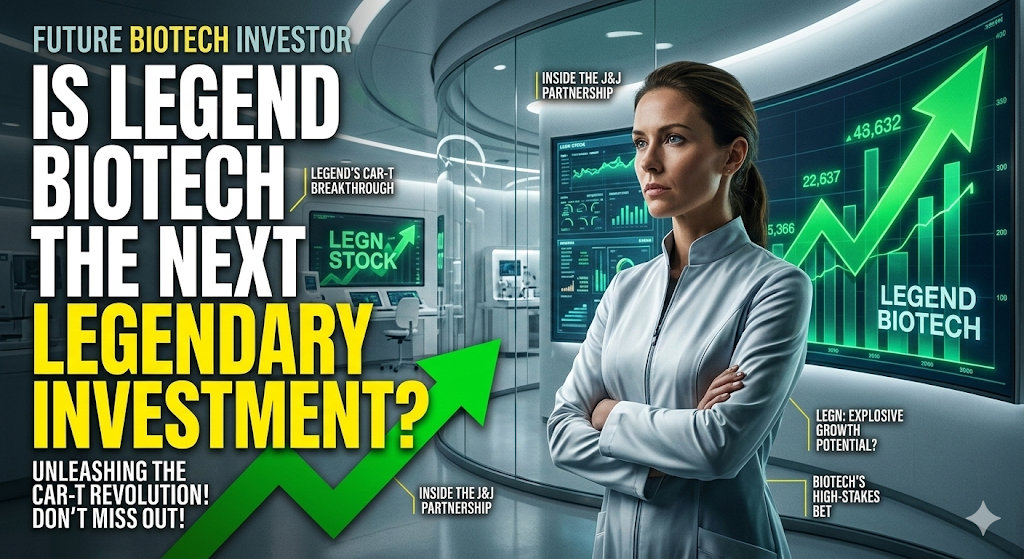
Legend Biotech (NASDAQ: LEGN) ranks second in our list of biotechnology stocks with more than 50% upside potential, and the company has emerged as a major player in the rapidly expanding field of cell therapy for cancer treatment. The company specializes in developing CAR-T therapies designed to harness the body’s immune system to attack cancer cells more effectively.
The company’s flagship therapy, Carvykti, has already established itself as an important treatment option for patients with multiple myeloma. However, analysts believe the therapy’s long-term growth potential may extend even further as clinical trials explore its use in earlier stages of the disease.
RBC Capital analyst Leonid Timashev recently reaffirmed his Outperform rating on the stock while setting a price target of $66. His analysis was influenced by updated guidance from the U.S. Food and Drug Administration regarding accelerated approval endpoints in multiple myeloma clinical trials. The FDA’s support for using minimal residual disease negativity and complete response rates as approval metrics could potentially shorten development timelines for therapies like Carvykti.
Raymond James analysts also reiterated their bullish outlook, highlighting the strong clinical data supporting the therapy and the expanding commercial opportunity in multiple myeloma treatment. As cell therapy technologies continue evolving, Legend Biotech remains one of the companies positioned to benefit from the growing adoption of advanced immunotherapy treatments.
READ ALSO: Top 10 Small-Cap FDA Catalyst Biotech Stocks and Top 5 Best Biotech Stocks of February 2026.
Disclosure: No relevant interests to disclose. This article was originally published on BioTech HealthX.