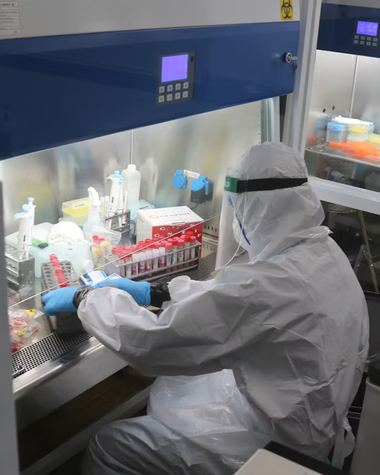
Founded with a singular focus on advancing antiviral science, this Boston-based biotech emerged from the belief that serious viral infections remain a persistent and evolving global health threat despite decades of pharmaceutical innovation. Built at the intersection of medicinal chemistry, virology, and translational biology, the company was established to address unmet medical needs where existing therapies fall short, particularly in chronic viral diseases that continue to burden healthcare systems worldwide. From its earliest days, the organization oriented itself as a research-driven enterprise dedicated to discovering and developing oral antiviral therapeutics that could combine scientific rigor with real-world clinical practicality.
Atea Pharmaceuticals Inc (NASDAQ:AVIR) was founded in Boston, Massachusetts, a global center for biotechnology and pharmaceutical development, and structured from inception as a clinical stage biopharmaceutical company with a narrow but deliberate focus. Rather than pursuing a broad therapeutic sprawl, Atea Pharmaceuticals concentrated its resources on antiviral drug development targeting serious viral infections caused by single stranded ribonucleic acid viruses, a prevalent cause of global infectious disease. This focus allowed the company to build deep expertise in nucleos(t)ide chemistry, biochemistry, biology, and virology, forming the scientific backbone of its proprietary nucleos(t)ide prodrug platform.
Atea Pharmaceuticals Inc distinguished itself early by emphasizing oral antiviral therapeutics designed for ease of use, safety, and scalability. Management recognized that even highly efficacious antiviral drugs can fail to achieve broad public health impact if treatment regimens are complex, prolonged, or burdened by drug drug interactions. As a result, the company’s background is closely tied to its mission to develop novel product candidates that combine high efficacy with patient-friendly attributes such as once-daily oral dosing, low risk of drug drug interactions, and minimal food effect. This philosophy directly shaped the company’s approach to hepatitis C virus, a disease that remains a leading cause of chronic liver disease despite the availability of direct acting antivirals.
Over time, Atea Pharmaceuticals evolved from a discovery-focused organization into a development-stage biotech advancing late-stage clinical programs. Its lead assets emerged from years of internal research leveraging the company’s nucleos(t)ide platform to inhibit viral replication at its source. The regimen of bemnifosbuvir, a nucleotide analog polymerase inhibitor, and ruzasvir, an NS5A inhibitor, became the centerpiece of this strategy, reflecting the company’s belief that combination therapies with complementary mechanisms are essential to achieving best in class profiles in antiviral treatment. This focus aligned Atea with established regulatory pathways and clinical endpoints, particularly in the treatment of hepatitis C virus HCV.
The company’s background is also defined by leadership continuity and scientific credibility. Led by founder and chief executive officer Jean-Pierre Sommadossi, PhD, Atea Pharmaceuticals Inc has been guided by a long-term vision grounded in antiviral expertise rather than short-term market cycles. Dr. Sommadossi’s experience in antiviral research and drug development informed the company’s disciplined progression from discovery through clinical development, shaping a culture centered on data integrity, regulatory alignment, and patient outcomes.
As a Nasdaq-listed biopharmaceutical company, Atea Pharmaceuticals built its corporate identity around advancing programs through clearly defined clinical phases rather than pursuing early commercialization prematurely. Its transition into Phase 3 clinical development marked a defining chapter in its background, signaling maturation from a research-oriented biotech into a late-stage development company with global ambitions. The scale of its hepatitis C clinical program, spanning hundreds of patients across North America and international markets, reflects years of infrastructure building, regulatory engagement, and operational execution.
Today, Atea Pharmaceuticals Inc stands as a focused antiviral biotech whose background is inseparable from the persistent global challenge of viral diseases. Its origins in antiviral discovery, its emphasis on addressing unmet medical needs, and its methodical advancement of oral antiviral therapeutics have shaped a company positioned at a critical juncture between clinical development and potential commercialization. As the global healthcare community continues to prioritize effective, accessible treatments for serious viral infections, Atea’s foundation in science-driven drug development remains central to its long-term narrative.
Atea Pharmaceuticals Inc Advances Toward a Defining Moment in Antiviral Drug Development
Atea Pharmaceuticals Inc has reached a pivotal stage in its evolution as a clinical stage biopharmaceutical company, marking a transition from development execution toward value creation driven by late-stage clinical data. Headquartered in Boston, Massachusetts, the company has spent years building a focused antiviral platform designed to address unmet medical needs in serious viral infections, with hepatitis C virus standing at the center of its most advanced program. As global healthcare systems continue to grapple with persistent viral diseases and gaps in treatment access, Atea Pharmaceuticals is positioning itself as a developer of oral antiviral therapeutics with the potential to meaningfully advance the standard of care.

CHECK THIS OUT: Corcept (CORT) Skyrockets 1,534% in 10 Years and Immuneering (IMRX) Reports 86% 9-Month Survival in Pancreatic Cancer.
Completion of Phase 3 Enrollment Signals a Critical Inflection Point
In December 2025, Atea Pharmaceuticals today announced the completion of patient enrollment in the C-BEYOND Phase 3 trial, a major milestone that significantly de-risks the company’s lead program. More than 880 treatment-naïve patients have been enrolled across approximately 120 clinical trial sites in the United States and Canada, making C-BEYOND one of the largest late-stage studies currently underway in chronic hepatitis C. Phase 3 topline data from this study are expected by mid-year 2026, providing investors with a clearly defined timeline for a potential value-defining readout.
At the same time, Atea continues to advance enrollment in its global companion study, C-FORWARD, another Phase 3 trial evaluating the same fixed-dose combination regimen of bemnifosbuvir and ruzasvir in an additional 880 treatment-naïve patients. This trial is being conducted across up to 17 countries outside North America, also spanning roughly 120 clinical sites, with completion of enrollment expected mid-year 2026 and topline results anticipated by year-end 2026. Together, these trials represent a comprehensive global development strategy designed to support future regulatory submissions and commercialization discussions.
A Differentiated Regimen Designed to Address Unmet Medical Needs
The core of Atea Pharmaceuticals’ bullish thesis lies in the clinical and commercial promise of its lead regimen, the fixed-dose combination of bemnifosbuvir and ruzasvir. Bemnifosbuvir is a nucleotide analog polymerase inhibitor, while ruzasvir is an NS5A inhibitor, together forming a direct acting antiviral regimen targeting hepatitis C virus HCV. In both Phase 3 trials, the regimen is administered orally once daily for eight weeks in patients without cirrhosis and twelve weeks in patients with compensated cirrhosis.
This shorter treatment duration compares favorably to the current standard-of-care comparator, the fixed-dose combination of sofosbuvir and velpatasvir, which is administered once daily for twelve weeks regardless of cirrhosis status. Management believes this profile supports a best in class positioning, particularly when combined with a low risk of drug drug interactions and no food effect. According to healthcare providers treating hepatitis C, concerns about drug drug interactions remain a significant reason for treatment delays, especially given that approximately 80 percent of HCV patients take multiple medications for comorbidities and coinfections.
The Persistent Global Burden of Hepatitis C Virus
Despite major advances in antiviral drug development over the past decade, hepatitis C virus continues to represent a significant global health challenge. In the United States, up to four million people are estimated to be living with chronic hepatitis C, while worldwide infections total approximately 50 million individuals. Each year, an estimated one million new infections occur globally, highlighting that eradication remains an unmet medical objective rather than an achieved outcome.
In the US specifically, new HCV diagnoses continue to outpace annual cure rates, underscoring systemic barriers to treatment initiation and completion. Chronic hepatitis C is a leading cause of liver disease, liver transplants, and liver cancer, with approximately 240,000 deaths occurring each year worldwide. Infections in the US predominantly affect individuals between the ages of 20 and 49, and fewer than ten percent of patients have cirrhosis at diagnosis, reinforcing the importance of early, convenient, and well-tolerated treatment options.
Strategic Leadership and Scientific Depth
Atea Pharmaceuticals is led by Jean-Pierre Sommadossi, PhD, the company’s founder and chief executive officer, whose background in medicinal chemistry, biology, biochemistry, and virology has shaped the company’s scientific direction. Under his leadership, Atea has built a proprietary nucleos(t)ide prodrug platform designed to target single stranded ribonucleic acid viruses, a prevalent cause of serious viral diseases. This platform approach allows the company to discover and develop novel product candidates that can be used alone or in combination, extending the pipeline beyond a single asset.
The focus on RNA viruses reflects a deliberate strategy to address viral infections where oral antivirals can deliver high efficacy with favorable safety profiles. By leveraging deep expertise in antiviral drug development, Atea aims not only to treat hepatitis C but also to expand into other serious viral diseases over time, creating long-term optionality for investors.
Regulatory Pathway and Commercial Implications
From a regulatory perspective, hepatitis C represents a well-established pathway for FDA review, with clearly defined endpoints such as sustained virologic response based on HCV RNA levels. This regulatory clarity reduces uncertainty relative to less mature therapeutic areas. The primary endpoint for both C-BEYOND and C-FORWARD is HCV RNA, aligning with prior approved therapies and facilitating direct comparison against existing regimens.
If Phase 3 data confirm high efficacy, safety, and the anticipated best in class profile, Atea Pharmaceuticals could be positioned to pursue regulatory approval and eventual commercialization in major global markets. The combination of shorter treatment duration, low risk of drug drug interactions, and no food effect could resonate strongly with physicians, patients, and payers seeking to expand treatment uptake and move closer to HCV eradication.
Investor Outlook as Data-Driven Catalysts Approach
As a Nasdaq-listed biotech trading under the ticker AVIR, Atea Pharmaceuticals’ valuation remains highly sensitive to clinical milestones. Completion of Phase 3 enrollment represents a meaningful reduction in execution risk and shifts investor focus toward upcoming data. With mid-2026 and late-2026 topline results now clearly visible, the company is entering a period where expectations around efficacy, safety, and differentiation are likely to drive trading activity and investor interest.
For investors evaluating the antiviral biotech space, Atea Pharmaceuticals offers exposure to a late-stage program addressing a large, persistent market with defined unmet medical needs. While risks inherent to clinical-stage biopharmaceutical companies remain, the convergence of scientific focus, regulatory clarity, and impending data readouts places Atea at a potentially transformative moment in its corporate lifecycle.
A Bullish Thesis Anchored in Execution and Unmet Need
The bullish investment case for Atea Pharmaceuticals Inc ultimately rests on its ability to deliver a best in class oral antiviral regimen that meaningfully advances the treatment of hepatitis C virus. By addressing drug drug interactions, simplifying treatment duration, and maintaining high efficacy, the company aims to remove key barriers that have slowed progress toward global HCV eradication. As Phase 3 data approach, Atea’s transition from discovery and development into a potential commercial-stage biotech represents a compelling finance news narrative driven by execution, scale, and unmet medical demand.
READ ALSO: Tiziana (TLSA) Surges 143% in 2025 and Immuneering (IMRX) Reports 86% 9-Month Survival in Pancreatic Cancer.