The growing global burden of obesity, type 2 diabetes, and cardiometabolic disease has reshaped how pharmaceutical research is prioritized, shifting attention toward therapies that can be deployed at scale, used long-term, and delivered in ways that fit seamlessly into patients’ daily lives. As healthcare systems struggle with rising chronic disease prevalence and escalating costs, the focus has increasingly turned toward drug platforms capable of addressing metabolic disorders not only with clinical efficacy but also with accessibility, convenience, and sustainability. This shift has created fertile ground for a new class of biotechnology companies centered on small molecule therapeutics, oral drug delivery, and structure-based drug discovery.
Structure Therapeutics (NASDAQ:GPCR) emerged within this transformation as a clinical-stage biopharmaceutical company dedicated to designing oral small molecule drugs targeting G-protein-coupled receptors for the treatment of obesity and other metabolic diseases. Rather than relying on injectable biologics or peptide therapies, Structure Therapeutics built its research foundation around structure-based computational drug design, using detailed molecular insights into GPCR biology to engineer compounds that are orally bioavailable, selective, and optimized for chronic use. This approach reflects a strategic belief that the future of obesity treatment and metabolic disease management lies in scalable oral therapies that can reach large patient populations without the logistical and psychological barriers associated with injections.
From its early development, Structure Therapeutics positioned itself as a platform company rather than a single-asset biotech. Its internal discovery engine integrates computational chemistry, molecular modeling, and medicinal chemistry to systematically explore GPCR targets involved in appetite regulation, energy balance, and metabolic homeostasis. By focusing on this receptor family, which underpins a significant proportion of existing pharmaceuticals, Structure Therapeutics aligned itself with one of the most validated and productive areas in drug development while simultaneously pushing into underexplored therapeutic territory.
The company’s background is deeply rooted in the scientific evolution of GPCR biology and the realization that these receptors play central roles in human metabolism and weight regulation. Structure Therapeutics built its intellectual property portfolio around this insight, aiming to translate decades of academic research into clinically viable treatments. This emphasis on scientific rigor and mechanistic understanding has shaped the company’s identity as a research-driven organization with long-term ambitions rather than a short-cycle development firm.
Structure Therapeutics also reflects the broader shift within biotechnology toward precision design rather than empirical trial-and-error. By leveraging structural biology and computational modeling, the company seeks to reduce development risk, improve target selectivity, and accelerate the transition from discovery to clinical testing. This approach has allowed Structure Therapeutics to build a pipeline that extends beyond a single program, reinforcing its positioning as a multi-asset metabolic disease innovator.
The global focus on obesity treatment has further amplified the relevance of Structure Therapeutics’ mission. Obesity is now recognized not merely as a lifestyle issue but as a chronic disease with profound medical, economic, and social consequences. Governments, insurers, and healthcare providers increasingly view effective obesity therapies as preventative interventions that reduce long-term healthcare costs and improve population health. By centering its strategy on obesity pharmacotherapy and metabolic disease treatment, Structure Therapeutics embedded itself within one of the fastest-growing segments of the pharmaceutical industry.
The company’s organizational evolution mirrors this ambition. Structure Therapeutics has built cross-functional teams spanning biology, chemistry, clinical development, and regulatory strategy, reflecting a holistic approach to drug development. This integrated structure is designed to support the progression of compounds from early discovery through clinical trials and, ultimately, toward regulatory approval and commercialization.
In this context, Structure Therapeutics represents a new generation of biotechnology companies shaped by data, computation, and a deep understanding of biological mechanisms. Its background is defined not by a single breakthrough moment but by a sustained effort to reimagine how metabolic diseases are treated, how drugs are designed, and how scalable therapies can be delivered to a growing global patient population. The company’s long-term vision aligns with the structural needs of modern healthcare, positioning it within a transformative shift toward more accessible, precise, and patient-friendly treatments for chronic disease.
A Stock Surge That Signals Something Much Bigger Than a One-Day Trade
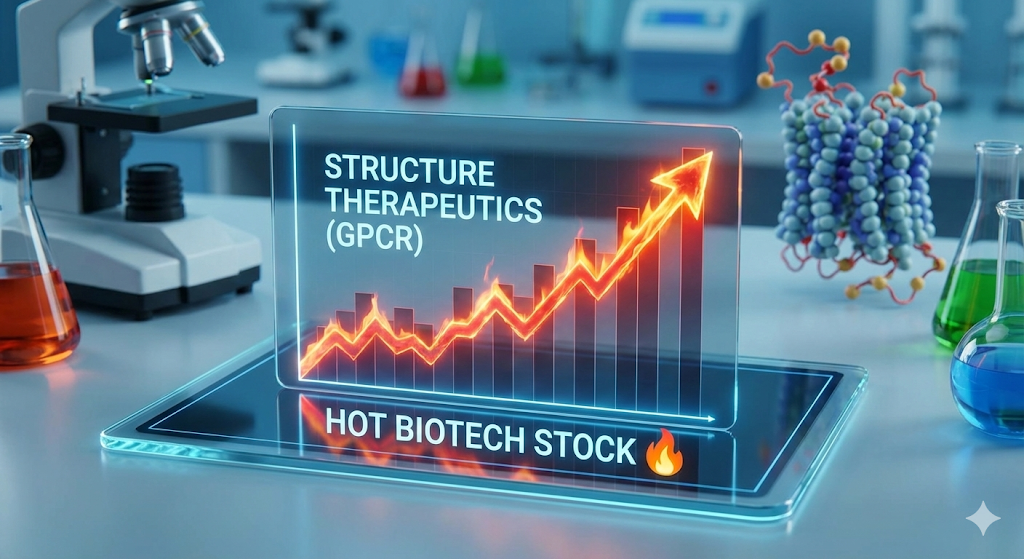
Structure Therapeutics Inc. has recently moved from being a relatively quiet clinical-stage biotech into a name that suddenly commands attention across financial media, analyst desks, and trading platforms. The sharp rise in the share price, with double-digit percentage gains in a single session, has not occurred in isolation or on speculation alone. It has been driven by concrete developments that strengthen the company’s scientific credibility, expand its pipeline, and extend its strategic runway at a time when the global pharmaceutical industry is racing to dominate the obesity and metabolic disease market.
The surge in Structure Therapeutics stock followed two critical announcements: a major GLP-1 licensing agreement and the initiation of a new Phase 1 clinical trial. Together, these events signal that Structure is no longer just an early-stage research company but is becoming a platform-level biotech with multiple shots on goal, validated intellectual property, and growing institutional confidence. While volatility remains part of the biotech sector, the current move in GPCR reflects a deeper reassessment of the company’s long-term potential rather than a fleeting headline reaction.
CHECK THIS OUT: Here’s Why Apogee Therapeutics (APGE) Is Suddenly on the Radar of Biotech Investors and Coeptis Therapeutics (COEP) Is Not Profitable Yet — and That’s Exactly Why It’s Interesting.
The GLP-1 Licensing Deal Changes the Strategic Narrative
The licensing agreement around Structure Therapeutics’ GLP-1 intellectual property is not merely a financial transaction; it is a validation event. In biotechnology, few signals are stronger than a credible partner assigning capital, resources, and strategic interest to a program. The GLP-1 receptor agonist market is one of the most competitive and valuable segments in global pharmaceuticals, driven by soaring demand for obesity treatments, diabetes management, and cardiometabolic risk reduction. Any company able to demonstrate differentiation in this space immediately attracts attention from major pharmaceutical players.
By securing a GLP-1 licensing deal, Structure Therapeutics has effectively confirmed that its science is not just academically interesting but commercially relevant. The deal underscores that its oral small-molecule GLP-1 approach is taken seriously by industry participants who already dominate injectable therapies. This is especially important because the future of obesity treatment is likely to move beyond injections toward more convenient, scalable oral therapies that can reach hundreds of millions of patients globally. Structure’s ability to position itself inside that future gives the company strategic relevance that far exceeds its current revenue profile.
This licensing activity also reduces long-term risk. It provides non-dilutive capital, extends the company’s financial runway, and embeds Structure within a broader ecosystem of drug development expertise, regulatory capability, and commercialization infrastructure. For investors, that translates into lower execution risk and higher probability that at least one asset eventually reaches the market.
Phase 1 Trial Initiation Expands the Pipeline and Reduces Single-Asset Risk
The initiation of a Phase 1 clinical study represents another crucial milestone. It confirms that Structure Therapeutics is not a one-program company but a pipeline company. The biotech sector routinely punishes firms that depend on a single asset, because failure in one trial can destroy most of the company’s value. Structure’s ability to advance new compounds into clinical testing shows that its structure-based discovery platform is not only innovative but productive.
By moving additional programs into human trials, Structure Therapeutics increases the statistical probability that at least one program succeeds, while also creating optionality for combination therapies, follow-on indications, and future licensing deals. This multi-asset progression is a hallmark of platform biotechs that eventually evolve into acquisition targets or independent commercial players.
It also strengthens the company’s narrative around metabolic disease leadership. Obesity is not a one-mechanism problem. It involves appetite regulation, energy expenditure, insulin signaling, and neurohormonal feedback loops. Structure’s ability to address multiple biological pathways through its pipeline positions it as more than a single-drug story and more like a metabolic disease innovator with long-term relevance.
Analyst Revisions Reflect a Structural Re-Rating, Not Just Optimism
Following the licensing deal and trial initiation, several research firms adjusted their price targets upward. While analyst upgrades alone are not investment theses, they matter when they reflect changes in perceived risk, timeline, and addressable market. Analysts highlighted Structure’s validated intellectual property and longer development runway as key positives, suggesting that the company is now viewed less as an experimental science play and more as a strategic asset with commercial potential.
At the same time, some analysts expressed caution about widening quarterly GAAP losses, which is not unusual for a company aggressively investing in R&D, trials, and platform expansion. The mixed coverage reflects a normal tension in high-growth biotech: excitement over scientific and strategic progress balanced against near-term financial losses that are necessary to fund that progress.
From a bullish perspective, this balance is healthy. It suggests that the market is not blindly euphoric, but rationally repricing risk based on new information. That kind of repricing often marks the beginning of a longer re-rating process rather than the end of one.
The Market Data Supports a Growing Institutional Interest
Structure Therapeutics currently carries a market capitalization of over four billion dollars, placing it in a size range where institutional investors, biotech funds, and healthcare specialists can participate meaningfully. The average trading volume of over one and a half million shares reflects strong liquidity, while the technical sentiment signal remains positive. Year-to-date performance is relatively flat, which implies that the recent surge is not the result of a long speculative run-up but a reaction to new information.
This combination of liquidity, size, and timing is important. It means Structure is not behaving like a microcap momentum stock but like a mid-cap biotech entering a new phase of market awareness. These transitions often precede longer periods of valuation expansion as new investor classes discover and analyze the story.
The Bigger Opportunity in the Obesity and Metabolic Disease Market
The long-term bullish thesis for Structure Therapeutics rests on the sheer scale of the obesity and metabolic disease market. Obesity affects hundreds of millions of people globally and is directly linked to diabetes, cardiovascular disease, and reduced life expectancy. Governments, insurers, and healthcare systems are increasingly willing to pay for effective treatments because the downstream costs of untreated obesity are enormous.
GLP-1 therapies have already demonstrated blockbuster potential, but they are limited by injection requirements, side effects, and accessibility constraints. Oral small-molecule alternatives could dramatically expand the market by making treatment easier, cheaper, and more scalable. Structure Therapeutics is one of the few companies attempting to bridge that gap with credible science and validated programs.
If even one of Structure’s compounds achieves regulatory approval, the addressable market would be vast. If multiple programs succeed, the company could become a central player in a new generation of metabolic disease treatment.
Why This Move Is Not Just a Trade, But a Structural Shift
The recent surge in Structure Therapeutics shares is not just about a licensing deal or a trial announcement. It reflects a broader shift in how the company is perceived. It is transitioning from a speculative early-stage biotech into a platform with validated science, multiple programs, industry partnerships, and a longer financial runway.
This is the moment when many great biotech stories begin to change character. The risk does not disappear, but it becomes more asymmetric. The downside becomes more bounded by tangible assets and partnerships, while the upside expands with each successful data readout, regulatory milestone, and strategic deal.
Structure Therapeutics is still in development. It still burns cash. It still faces clinical and regulatory risk. But it is no longer unproven. It is no longer isolated. And it is no longer invisible.
That combination of scientific credibility, strategic validation, pipeline expansion, and market opportunity is exactly what long-term growth investors look for in emerging biotech leaders. The recent price surge may be volatile, but the underlying story suggests something more durable is forming beneath it.
In that sense, Structure Therapeutics is not just experiencing a rally. It is experiencing a redefinition. And those moments, when a company’s identity shifts in the eyes of the market, are often where the most meaningful long-term value creation begins.
READ ALSO: Could UnitedHealth Group (UNH) Be the Safest Way to Invest in Healthcare Growth? and SELLAS Life Sciences Group (SLS) Just Took a Big Step Toward Changing How Cancer Is Treated.