
It began as a focused scientific effort aimed at addressing some of the most complex and underserved areas of modern medicine, particularly metabolic and endocrine disorders that affect millions of people worldwide. From its earliest days, the organization was structured around the idea that targeted, mechanism-driven drug development could unlock treatments for diseases that traditional pharmaceutical approaches had struggled to solve. Rather than pursuing a broad portfolio of unrelated projects, the company concentrated its research on a defined set of biological pathways connected to metabolism, hormone regulation, and chronic disease, building a foundation rooted in scientific precision and long-term therapeutic relevance.
Viking Therapeutics (NASDAQ:VKTX) was founded as a clinical-stage biotechnology company with a mission to develop innovative therapies for metabolic disease, obesity, diabetes, fatty liver disease, and rare endocrine disorders. From the outset, Viking Therapeutics positioned itself within the rapidly growing biotech sector by focusing on diseases with both significant unmet medical need and large commercial potential. This dual focus allowed Viking Therapeutics to align scientific ambition with economic sustainability, ensuring that its research efforts could eventually translate into scalable, real-world treatments.
As the biotechnology industry evolved toward more targeted and personalized medicine, Viking Therapeutics built its development strategy around selective receptor agonists and hormone-based therapies designed to modify disease pathways at a molecular level. This approach differentiated Viking Therapeutics from companies pursuing purely symptomatic treatments and placed it among a new generation of biotech firms focused on disease modification rather than disease management. Over time, this philosophy shaped the company’s pipeline, research partnerships, and internal capabilities.
The company’s emphasis on metabolic and endocrine disorders proved especially timely as global obesity rates climbed and metabolic syndrome emerged as one of the most significant public health challenges of the 21st century. Viking Therapeutics responded to this shift by deepening its focus on obesity drug development, GLP-1 therapy, and other metabolic disease treatments that could potentially reshape how chronic conditions are managed. This positioning anchored Viking Therapeutics firmly within one of the fastest-growing and most strategically important segments of the pharmaceutical research landscape.
Viking Therapeutics also developed its pipeline with diversification in mind, advancing multiple drug candidates across different stages of clinical development. This multi-asset approach reduced reliance on any single program and reflected a long-term view of value creation based on platform depth rather than isolated breakthroughs. Each candidate was designed to target a specific biological mechanism, reinforcing the company’s identity as a science-first organization grounded in rational drug design.
As a NASDAQ-listed biotech stock, Viking Therapeutics gained access to public capital markets, enabling it to fund clinical trials, expand research operations, and pursue regulatory approvals. This access to capital was critical for sustaining long development timelines inherent in biotechnology and allowed Viking Therapeutics to remain independent while advancing its programs through early- and mid-stage clinical testing. The company’s public listing also increased its visibility among institutional investors, healthcare specialists, and strategic partners within the pharmaceutical industry.
The evolution of Viking Therapeutics mirrors broader trends within the biotech sector, where small, focused research organizations increasingly drive innovation that larger pharmaceutical companies later commercialize or acquire. Viking Therapeutics built itself as one of these innovation engines, designed to generate high-value intellectual property and clinical data that could eventually support partnerships, licensing agreements, or full commercialization.
Over time, Viking Therapeutics became known not only for its scientific focus but also for its disciplined approach to development, regulatory engagement, and capital management. The company structured its operations to balance scientific exploration with financial responsibility, ensuring that research progress could continue through changing market conditions and investor cycles. This balance helped Viking Therapeutics navigate the inherently volatile biotech landscape while remaining committed to its long-term mission.
Today, Viking Therapeutics stands as a representative example of the modern clinical-stage biotechnology company: lean, research-driven, focused on high-impact disease areas, and built around a pipeline rather than a single product. Its background reflects a deliberate effort to align scientific innovation with market relevance, creating a company designed to participate meaningfully in the future of metabolic disease treatment and endocrine therapy.
What defines Viking Therapeutics is not just its current stage of development, but the architecture of its ambition. It is built to explore, test, refine, and eventually deliver therapies that address some of the most pressing health challenges of our time. That long arc of development, rooted in scientific intent and sustained by strategic focus, is what shapes the company’s identity and its role within the biotechnology ecosystem.
Viking Therapeutics Is at the Intersection of a Market Reset and a Biotech Supercycle
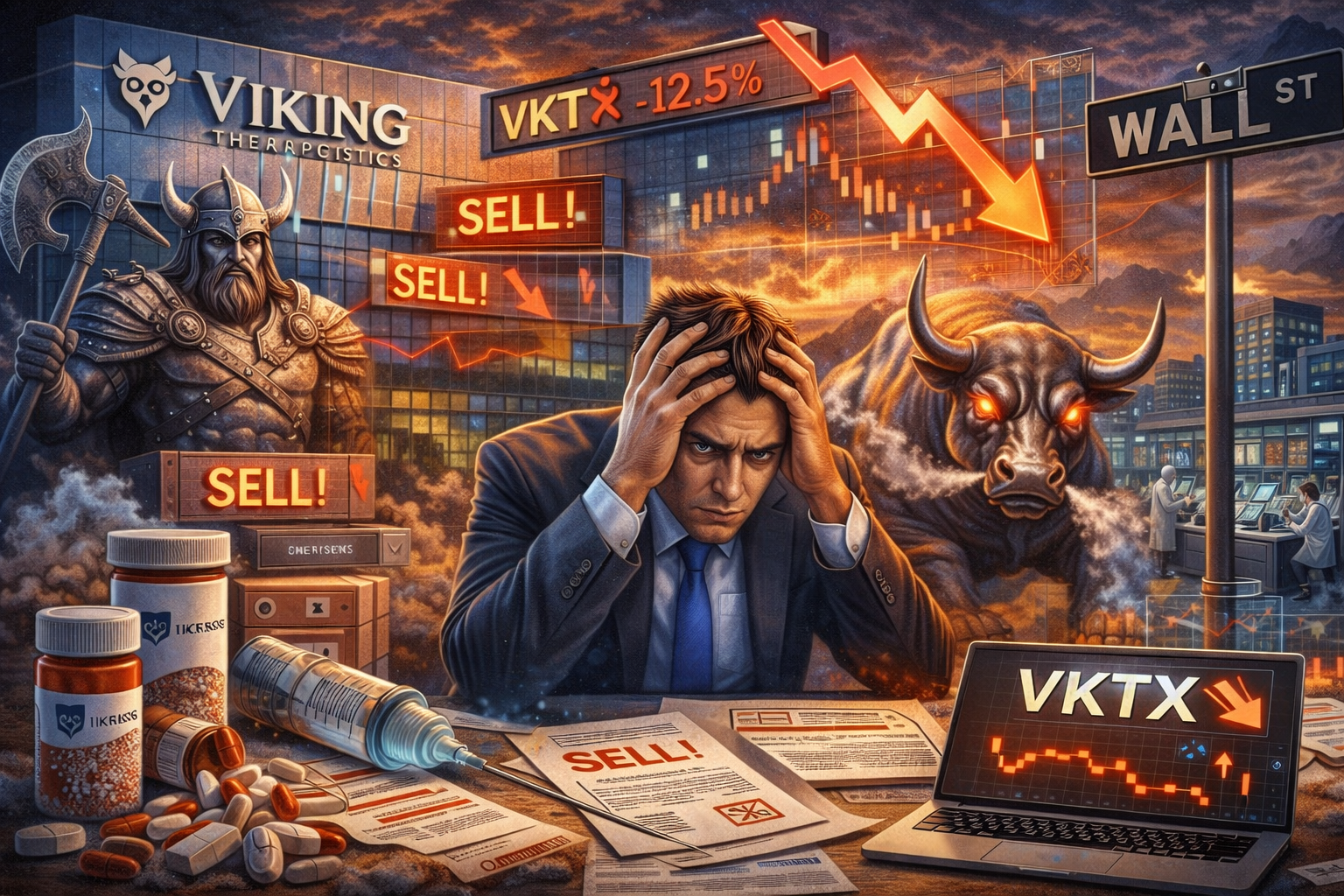
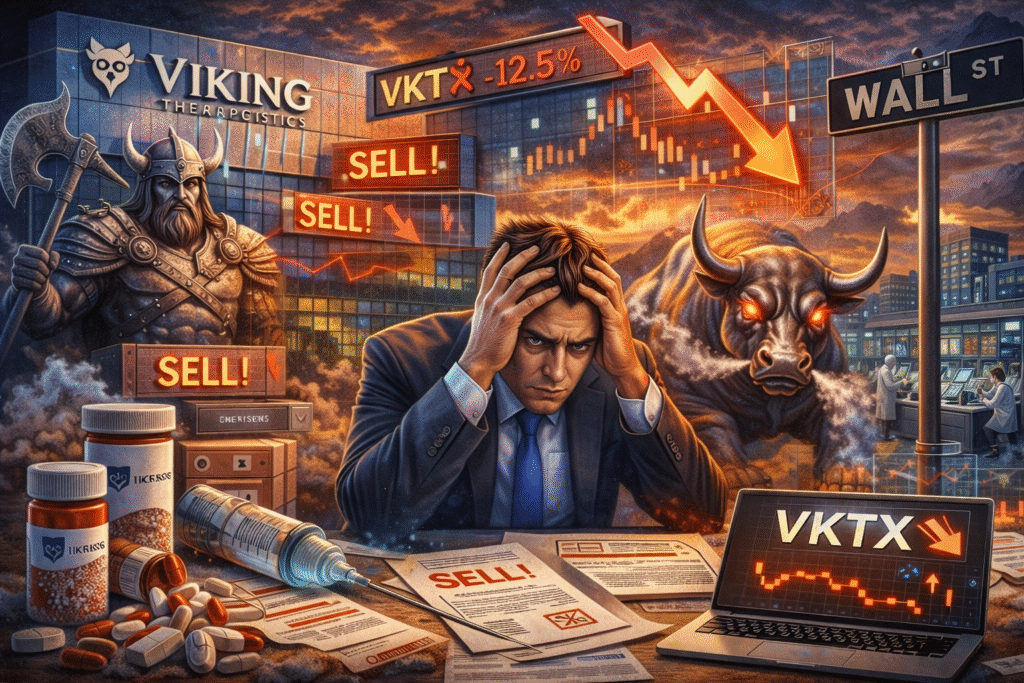
Viking Therapeutics, Inc. has entered a phase that many of the most successful biotech growth stocks experience before their next major re-rating: a period of price stagnation, rising skepticism, and apparent disconnection between share price performance and underlying long-term potential. With Viking Therapeutics stock trading near $32 after a sharp short-term pullback and a weaker one-year return, investor sentiment has cooled despite the company’s position in some of the most attractive areas of modern biotechnology.
This disconnect between price behavior and fundamental opportunity is exactly where long-term value often forms. Viking Therapeutics is not a mature pharmaceutical company. It is a clinical-stage biotech focused on metabolic and endocrine disorders, targeting disease categories that are expanding at unprecedented rates due to global obesity trends, rising diabetes prevalence, and increasing awareness of metabolic health. These are not cyclical markets. They are structural growth markets with decades-long demand.
The recent share price weakness reflects uncertainty, not deterioration. It reflects a market recalibrating expectations, not a business losing relevance. In fact, the long-term narrative for Viking Therapeutics may be stronger now than at any point in its history, precisely because expectations have reset while the scientific and commercial opportunity remains intact.
CHECK THIS OUT: Here’s Why Apogee Therapeutics (APGE) Is Suddenly on the Radar of Biotech Investors and Coeptis Therapeutics (COEP) Is Not Profitable Yet — and That’s Exactly Why It’s Interesting.
Understanding the Recent VKTX Stock Pullback in Context
Viking Therapeutics shares have been roughly flat over the last three months and down meaningfully over the past year, while still delivering strong multi-year returns. That pattern is common in clinical-stage biotech stocks, where valuation moves in cycles driven by clinical milestones, capital markets sentiment, and changing risk appetite.
The 30-day decline of more than 16 percent and the one-year decline of over 22 percent do not necessarily signal failure. They signal that investors have stepped back after earlier enthusiasm, creating a new entry point for those willing to look beyond short-term volatility. The market has moved from excitement to caution, and that shift has reset valuation in a way that long-term investors should examine carefully.
This is the moment when price stops telling the story and fundamentals start to matter more.
Why Price-to-Book Alone Misses the True Value of Viking Therapeutics
At a price-to-book ratio of approximately 5.1x, Viking Therapeutics appears expensive compared to the broader biotech industry average but still cheaper than its closest peer group. On the surface, this mixed signal confuses many investors. Is Viking overvalued, fairly valued, or undervalued?
The reality is that price-to-book is a blunt instrument for valuing a research-driven biotech company. Book value reflects accounting assets, not scientific intellectual property, not future drug revenues, and not platform potential. Viking Therapeutics’ true value lies not in its balance sheet today, but in the probability-weighted value of its drug pipeline.
The company is currently reporting losses and no revenue because it is still in the investment phase of its lifecycle. That is exactly what it should be doing. Every dollar spent today is building clinical data, regulatory progress, and long-term optionality. Using traditional industrial valuation metrics to judge a clinical biotech is like valuing a software company based on office furniture. It misses what actually matters.
The DCF Disconnect Highlights the Market’s Underappreciation of Pipeline Potential
The discounted cash flow model presents a striking contrast. With a fair value estimate many multiples above the current share price, the DCF suggests that the market is heavily discounting Viking Therapeutics’ future cash-generating ability.
This gap exists because the market assigns a low probability to long-term success, while the DCF assigns higher confidence in commercialization and scale. That tension between skepticism and possibility is where asymmetric returns are born.
If Viking’s pipeline succeeds, even partially, today’s valuation looks deeply conservative. If it fails, the downside is real, but that risk is increasingly visible and arguably already reflected in the share price after the recent pullback. The stock now sits in a zone where the downside is known, while the upside remains open-ended.
Viking Therapeutics Is Positioned in the Hottest Therapeutic Markets in Modern Medicine
The company’s focus on metabolic disease, obesity treatment, and endocrine disorders places it squarely inside one of the most powerful healthcare trends of this generation. The success of GLP-1 therapies has validated obesity and metabolic health as one of the most commercially valuable therapeutic areas in the world.
Viking Therapeutics is not chasing marginal indications. It is building drugs for markets measured in tens of billions of dollars annually, with long duration, high patient persistence, and strong payer support. The company’s development of both injectable and oral metabolic therapies expands its addressable market and positions it to compete across multiple segments of the obesity drug landscape.
This is not a binary story of one drug and one outcome. It is a portfolio of scientific bets within a sector that is structurally expanding.
The Psychology of Biotech Investing Favors Patience Over Timing
Most investors attempt to buy biotech stocks at the peak of excitement and sell at the trough of uncertainty. That behavior systematically transfers returns from patient capital to emotional capital.
The current phase for Viking Therapeutics is one of doubt. The share price is lower, enthusiasm has faded, and valuation metrics look confusing. This is precisely when long-term investors should be leaning in rather than stepping away.
Biotech is not about quarterly earnings. It is about multi-year development arcs. The question is not what Viking Therapeutics earns today. The question is what Viking Therapeutics could earn if its science succeeds.
Viking Therapeutics as a Long-Term Biotech Growth Stock
Viking Therapeutics stock represents a classic long-duration growth asset wrapped in short-term volatility. The company is investing heavily today so that it can create enormous value tomorrow. Its losses are not signs of weakness, but signs of commitment to building something that does not yet exist.
The market currently values Viking Therapeutics like a speculative risk. The long-term reality may be that it is a strategic asset in one of the most important healthcare revolutions of the decade.
For investors who understand the difference between price and value, between volatility and risk, and between temporary uncertainty and permanent impairment, Viking Therapeutics offers something rare. It offers the opportunity to invest in innovation when it is unpopular, in science when it is uncertain, and in potential when it is discounted.
That is where the best biotech returns are made.
READ ALSO: Could UnitedHealth Group (UNH) Be the Safest Way to Invest in Healthcare Growth? and SELLAS Life Sciences Group (SLS) Just Took a Big Step Toward Changing How Cancer Is Treated.