The company emerged as a standalone business during a period when global consumer health brands were being re-evaluated for their ability to operate independently in an increasingly competitive and regulated marketplace. Its creation was rooted in the idea that everyday health, wellness, and personal care products could thrive as a focused pure-play enterprise rather than as a division inside a diversified healthcare conglomerate. This separation marked a pivotal moment, as it transferred decades of brand equity, manufacturing scale, and consumer trust into a new public company tasked with proving it could sustain growth, margins, and relevance on its own in a rapidly evolving consumer landscape.
Kenvue (NYSE:KVUE) was formed through the spin-off of Johnson & Johnson’s consumer health division, inheriting a portfolio of some of the most recognizable over-the-counter and personal care brands in the world. From its inception, the company positioned itself as a global consumer health leader, operating across self-care, skin health and beauty, and essential health products. This portfolio includes household names that have been staples in medicine cabinets and bathrooms for generations, giving the business immediate scale, global reach, and a deeply entrenched retail presence across pharmacies, supermarkets, and e-commerce platforms.
Kenvue’s background is closely tied to the evolution of consumer healthcare itself. Its brands were built during an era when trust, safety, and mass-market accessibility were the primary drivers of consumer choice. Over decades, these products established dominant positions through physician recommendations, widespread advertising, and broad distribution rather than through rapid innovation cycles. As a result, the company entered public markets with a business model centered on brand longevity, incremental product improvements, and steady cash flow generation rather than breakthrough innovation or high-growth pipelines.
Operating as an independent company introduced new realities that did not exist under its former parent. Kenvue assumed full responsibility for supply chains, regulatory compliance, litigation exposure, marketing investment, and capital allocation decisions. This transition reshaped how the company is evaluated by investors, as it no longer benefits from the diversification or balance sheet support of a larger healthcare conglomerate. Instead, performance is now judged directly on organic revenue growth, margin stability, and the ability to defend market share in mature but highly competitive consumer health categories.
The company’s global footprint reflects decades of expansion into international markets, with products sold across North America, Europe, Asia, and emerging economies. This geographic diversification provides exposure to a wide range of consumer demographics and healthcare spending patterns, but it also introduces complexity related to local regulations, pricing controls, and shifting consumer preferences. As consumer health trends evolve toward personalization, digital engagement, and private-label competition, the company’s legacy brands face the challenge of maintaining relevance while preserving their premium positioning.
Kenvue’s identity is also shaped by its regulatory and legal history, inherited alongside its brand portfolio. Consumer health products operate under intense scrutiny because they are directly associated with safety, wellness, and daily use. This environment demands constant investment in quality control, compliance, and risk management, making reputational strength both an asset and a vulnerability. The company’s background therefore reflects not only commercial success, but also the long-term responsibilities that come with managing trusted health brands at global scale.
Today, Kenvue stands as one of the largest pure-play consumer health companies in the world, defined by its separation from Johnson & Johnson and its ambition to chart an independent path forward. Its background tells the story of legacy brands transitioning into a new corporate structure, carrying both the advantages of scale and the constraints of maturity. As consumer behavior, regulation, and competition continue to evolve, the company’s history underscores the challenge of transforming established household names into engines of sustainable growth in a modern consumer health market.
A High-Stakes Deal That Exposes Kenvue’s Structural Weaknesses
The renewed spotlight on Kenvue Inc following Kimberly-Clark’s proposed acquisition has reignited debate about the company’s long-term prospects, but from a bearish perspective, the situation underscores more problems than solutions. While proxy advisor ISS has indicated that support for the transaction may be warranted, the very fact that Kenvue is now positioned as a takeover target less than two years after its spin-off speaks volumes about the fragility of its standalone investment thesis. Instead of reinforcing confidence in Kenvue’s ability to grow independently, the proposed tie-up highlights the structural challenges, legal overhangs, and market skepticism that have plagued the stock since its public debut.
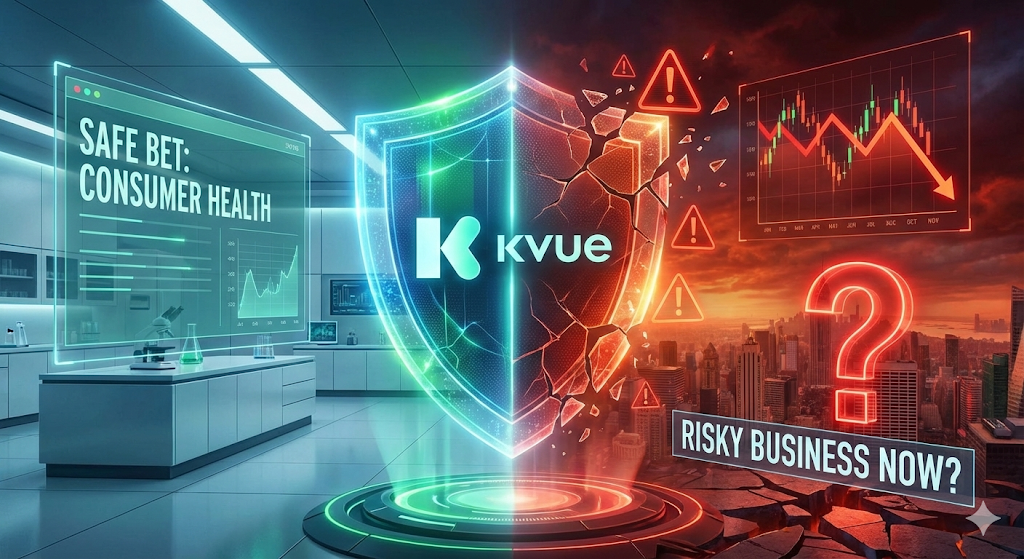
Kenvue was marketed to investors as a stable, defensive consumer health powerhouse built around iconic brands such as Tylenol, Band-Aid, Neutrogena, and Aveeno. In theory, these household names were supposed to deliver predictable cash flows, modest growth, and resilience across economic cycles. In practice, the company has struggled to convince the market that brand strength alone is enough to overcome slowing category growth, intensifying competition, and rising legal and regulatory risks. The sharp decline in Kenvue’s share price since its 2023 listing reflects a growing realization that the business may be structurally weaker than originally assumed.
CHECK THIS OUT: Here’s Why Apogee Therapeutics (APGE) Is Suddenly on the Radar of Biotech Investors and Coeptis Therapeutics (COEP) Is Not Profitable Yet — and That’s Exactly Why It’s Interesting.
Market Reaction Signals Deep Investor Doubt
One of the most telling elements of the bearish case is the market’s reaction to the proposed acquisition. Since the deal was announced, Kimberly-Clark’s share price has dropped sharply, while Kenvue’s stock has fallen even more dramatically since becoming a public company. These declines are not just noise or short-term volatility; they are signals that investors are uneasy about the strategic logic, valuation assumptions, and risk transfer embedded in the transaction.
For Kenvue shareholders, the steep post-IPO decline suggests that the market has consistently reassessed the company downward as a standalone entity. Rather than viewing the consumer health portfolio as a premium defensive asset, investors have increasingly priced it as a slow-growth, litigation-exposed business with limited upside. The fact that activist investors have been pushing for a sale reinforces this view. Activism often emerges when a company’s organic growth narrative fails to materialize and the only perceived path to value realization is through a strategic exit.
Litigation and Regulatory Overhang Remain Central Risks
A core pillar of the bearish thesis on Kenvue is the persistent legal and regulatory uncertainty surrounding its products. Ongoing litigation tied to talc-related baby powder claims continues to cast a long shadow over the company, even after the separation from Johnson & Johnson. While management has sought to distance Kenvue from legacy liabilities, the market has not been fully convinced that these risks are contained.
Adding to this uncertainty are heightened regulatory and political sensitivities around consumer health products. Public warnings and scrutiny related to the safety of active ingredients, including concerns raised about Tylenol, amplify reputational risk. For a company whose value is heavily tied to consumer trust, even the perception of safety issues can erode brand equity and pressure sales. From a bearish standpoint, these risks are asymmetric: they may not generate upside, but they can create sudden and severe downside if adverse rulings, settlements, or regulatory actions occur.
A Portfolio Dominated by Mature, Low-Growth Categories
Another fundamental weakness in Kenvue’s investment profile lies in the nature of its product portfolio. The company operates primarily in mature consumer health and personal care categories where long-term growth is constrained by demographics and competition rather than driven by innovation. Over-the-counter medicines, baby care, and mass-market skincare products tend to grow slowly, often in line with population growth and pricing power rather than volume expansion.
In recent years, these categories have become increasingly competitive, with private-label brands and digitally native challengers gaining share by offering lower prices or more targeted marketing. This dynamic compresses margins and limits Kenvue’s ability to drive meaningful organic growth. From a bearish perspective, the absence of strong secular growth drivers makes it difficult for the company to justify premium valuation multiples or deliver sustained earnings expansion.
Cost Pressures and Margin Fragility
Kenvue’s operating model is also vulnerable to persistent cost pressures. Inflation in raw materials, packaging, logistics, and labor has weighed on consumer goods companies across the board, but Kenvue’s ability to pass these costs on to consumers is constrained by price sensitivity in its core markets. While price increases can protect margins in the short term, they risk volume erosion as consumers trade down to cheaper alternatives.
As a newly independent company, Kenvue also faces a higher standalone cost structure. Functions that were previously absorbed within a larger corporate parent now sit directly on its income statement, increasing overhead and reducing operating leverage. If revenue growth remains sluggish, these fixed costs can further pressure margins and free cash flow, reinforcing the bearish outlook.
The Acquisition Narrative Masks, Rather Than Solves, Core Issues
Supporters of the proposed transaction argue that a tie-up with Kimberly-Clark could improve financial metrics and generate synergies. However, from a bearish perspective, this argument risks confusing financial engineering with fundamental value creation. Combining two large, mature consumer goods businesses does not automatically solve the underlying problem of slow growth and margin pressure. Instead, it may simply aggregate risks while offering limited incremental upside.
The absence of public shareholder opposition to the deal does not necessarily signal enthusiasm. It may instead reflect resignation, as investors accept that Kenvue’s standalone prospects are uninspiring and that a sale may be the least bad option. That mindset itself is bearish, as it implies limited confidence in management’s ability to unlock value organically.
Valuation Compression Remains a Persistent Threat
Even after the significant decline in Kenvue’s share price, valuation risk remains. Consumer health companies without clear growth catalysts tend to trade at discounted multiples, particularly when legal and regulatory uncertainties loom large. If earnings growth continues to disappoint or litigation costs escalate, further multiple compression is possible. In that scenario, even a takeover premium may fail to fully offset long-term underperformance for shareholders who bought into the IPO narrative.
A Bearish Long-Term View on Kenvue
Taken together, the proposed acquisition and the surrounding market dynamics reinforce a bearish long-term view on Kenvue. The company faces a combination of mature product categories, intense competition, margin fragility, and significant legal and regulatory overhangs. The sharp decline in its share price since listing suggests that investors are increasingly skeptical of its ability to deliver on the promise of stable growth and dependable returns.
Rather than signaling strength, the takeover interest highlights Kenvue’s vulnerability as a standalone business. For bearish investors, the key takeaway is that the current situation does not represent a temporary setback, but a structural challenge. Unless Kenvue can meaningfully accelerate innovation, restore pricing power, and definitively resolve its litigation risks, the long-term risk-reward profile remains skewed to the downside, even in the presence of headline-grabbing acquisition talks.
READ ALSO: Could UnitedHealth Group (UNH) Be the Safest Way to Invest in Healthcare Growth? and SELLAS Life Sciences Group (SLS) Just Took a Big Step Toward Changing How Cancer Is Treated.