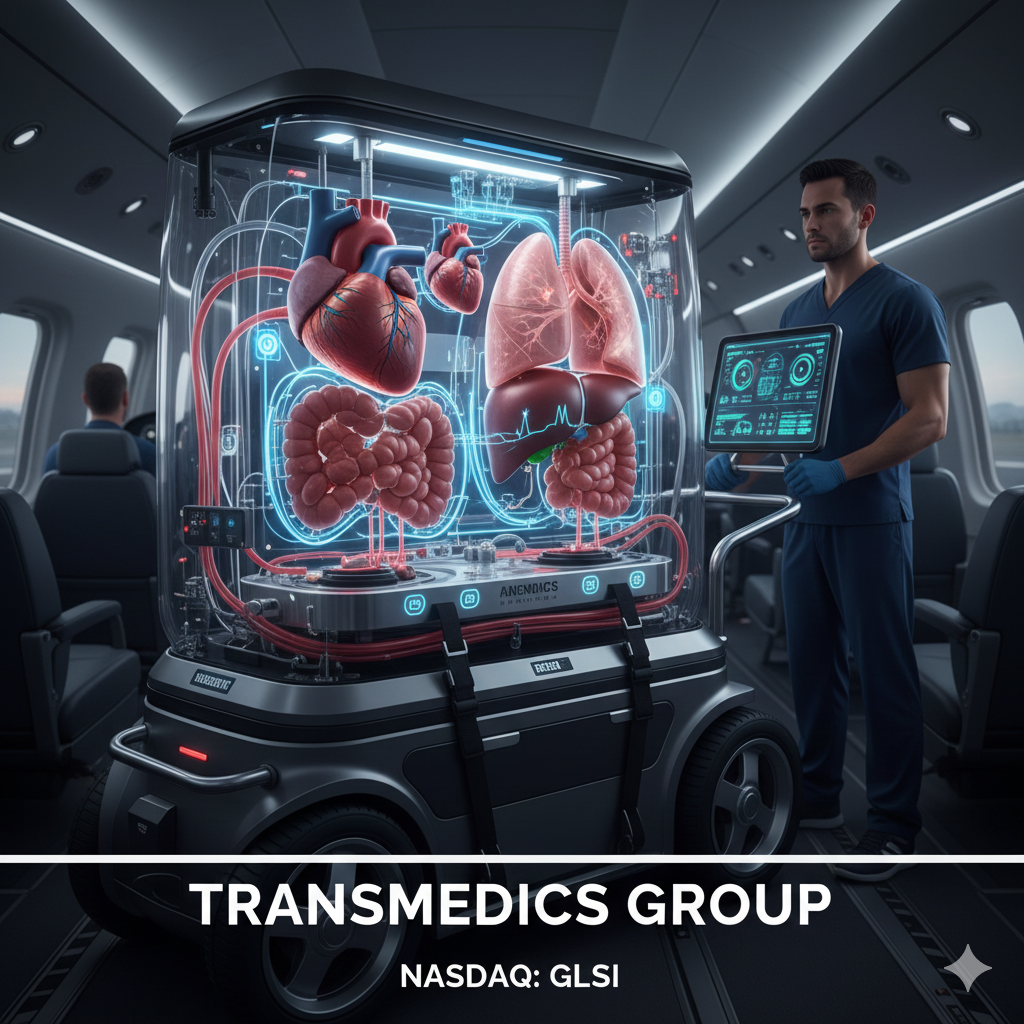
It started with a recognition that one of modern medicine’s most life-saving procedures was constrained not by surgical skill, but by biology and time. For decades, organ transplantation relied on static cold storage, a method that slows cellular metabolism but also deprives organs of oxygen and nutrients, leading to damage that limits how long organs remain viable. This fundamental bottleneck meant that many donated organs were never transplanted, not because of lack of need, but because preservation science had not evolved fast enough to match clinical demand.
TransMedics Group Inc. (NASDAQ:TMDX) emerged from this problem with a singular focus on transforming how donor organs are preserved, evaluated, and transported. Rather than treating organs as inert tissue to be frozen and rushed against the clock, TransMedics developed a technology platform designed to keep organs alive outside the human body. The company’s Organ Care System was built to maintain donor organs in a near-physiological state, continuously perfused with oxygenated blood or solution, allowing cellular function to continue during transport. This approach marked a shift from passive preservation to active organ management.
TransMedics Group, Inc. built its foundation around rigorous scientific validation, recognizing that transplant medicine demands evidence, not assumptions. The science behind its clinical trials centers on ischemia-reperfusion injury, a process where organs suffer damage when blood supply is cut off and then suddenly restored during transplantation. Traditional cold storage reduces metabolic demand but does not prevent this injury. By contrast, normothermic machine perfusion, the principle behind the Organ Care System, supplies oxygen and nutrients continuously, reduces cellular stress, and allows clinicians to monitor organ function in real time. Clinical trials compared outcomes between organs preserved with the Organ Care System and those stored on ice, measuring variables such as graft survival, primary graft dysfunction, and post-transplant recovery.
As TransMedics Group, Inc. expanded its clinical programs, its background became increasingly defined by data accumulation across heart, lung, and liver transplants. In these trials, organs preserved on the Organ Care System demonstrated comparable or improved outcomes while extending preservation times, which in turn expanded the geographic radius for donor-recipient matching. This capability allowed transplant teams to accept organs that might otherwise have been declined, directly addressing organ discard rates. The company’s research approach emphasized reproducibility, with standardized protocols designed to satisfy regulatory bodies and reassure conservative transplant centers.
Beyond technology, TransMedics Group, Inc. evolved into a service-oriented organization deeply embedded in the transplant workflow. Its background includes building logistics networks, clinical support teams, and monitoring systems that operate alongside hospitals and organ procurement organizations. This integration was not incidental but a response to the complexity of transplantation, where timing, coordination, and decision-making are as critical as the device itself. By combining science, operations, and clinical support, the company positioned itself as infrastructure rather than a standalone medical device vendor.
The company’s background also reflects a deliberate focus on unmet medical need rather than discretionary healthcare spending. Organ failure remains a growing global challenge driven by aging populations and chronic disease prevalence. TransMedics Group, Inc. aligned its research and commercialization strategy with this reality, prioritizing technologies that improve utilization of existing donor organs instead of relying on expanded donor supply. This orientation grounded the business in long-term healthcare demand rather than short-term adoption cycles.
Over time, TransMedics Group, Inc. transitioned from early clinical validation into broader adoption as transplant centers gained confidence in real-world outcomes. Each additional transplant performed using the Organ Care System contributed to a growing evidence base, reinforcing trust among surgeons, regulators, and hospital administrators. This accumulation of clinical data became a cornerstone of the company’s credibility, supporting expanded indications and wider geographic adoption.
Today, the background of TransMedics Group, Inc. is defined by its role in reshaping transplant preservation science. Its origins lie in a biological insight about how organs respond to oxygen, temperature, and time, translated into a platform that merges medical research with operational execution. Rather than disrupting transplantation through automation or artificial intelligence alone, the company focused on preserving life at the cellular level, building a foundation rooted in physiology, clinical evidence, and long-term integration into healthcare systems.
TransMedics Group’s Return on Equity Signals a Business Scaling Faster Than Its Industry
TransMedics Group, Inc. has increasingly drawn investor attention as one of the rare medical device companies combining strong revenue growth with improving profitability metrics. Among the most striking indicators of this operational progress is the company’s reported return on equity, which reached approximately 26% over the trailing twelve months to September 2025. In an industry where capital intensity, long development cycles, and conservative hospital adoption often suppress returns, this level of ROE stands out as a signal that TransMedics may be transitioning from an innovation-driven growth story into a scalable, economically efficient healthcare platform.
Return on equity measures how effectively a company converts shareholder capital into net profit. In TransMedics Group’s case, the calculation reflects net profit of roughly US$92 million against shareholders’ equity of approximately US$355 million, meaning the company generated about 26 cents of profit for every dollar invested by shareholders. Compared with the broader medical equipment industry, where average ROE hovers around 9.8%, TransMedics’ performance suggests that its business model is delivering returns well above sector norms.
READ ALSO: Tiziana (TLSA) Surges 143% in 2025 and Immuneering (IMRX) Reports 86% 9-Month Survival in Pancreatic Cancer.
Understanding What Drives TransMedics Group’s Elevated ROE
The strength of TransMedics Group’s ROE cannot be evaluated in isolation from its underlying business model. The company operates at the intersection of medical devices, services, and logistics, centered on its Organ Care System, which preserves donor organs in a functioning, near-physiological state outside the human body. This technology addresses one of the most persistent bottlenecks in transplant medicine: the high discard rate of donor organs due to preservation limits associated with traditional cold storage.
By extending preservation times and enabling real-time assessment of organ viability, TransMedics effectively increases the usable supply of donor organs without requiring new sources of donation. This dynamic has allowed the company to benefit from structural demand rather than cyclical trends. Each successful transplant performed using the Organ Care System generates not only device-related revenue but also recurring service income through logistics, clinical support, and data-driven monitoring, all of which contribute to margin expansion and improved capital efficiency.
How Debt Influences the ROE Profile
A critical part of analyzing TransMedics Group’s 26% return on equity is understanding the role of leverage. The company currently operates with a debt-to-equity ratio of approximately 1.44, indicating that debt has been used to accelerate growth and scale operations. In accounting terms, the use of debt can amplify ROE by increasing returns without proportionally increasing equity. This leverage-driven boost does not diminish the operational achievements of TransMedics, but it does introduce an additional layer of risk that investors must consider.
The key question is whether the returns generated by the business justify the leverage employed. In TransMedics’ case, rising procedure volumes, expanding adoption across heart, lung, and liver transplants, and increasing contribution from its National OCS Program suggest that leverage has been deployed to build durable infrastructure rather than fund short-term financial engineering. As long as transplant volumes continue to grow and reimbursement frameworks remain supportive, the company’s ability to service and potentially reduce debt improves over time.
Operational Execution Separates TransMedics From Typical Medical Equipment Peers
Unlike many medical equipment companies that rely primarily on capital equipment sales, TransMedics Group has built a vertically integrated model that blends technology with execution. The Organ Care System is not simply sold to hospitals and left to operate independently. Instead, TransMedics often provides end-to-end solutions that include organ retrieval coordination, transportation logistics, and clinical oversight. This integrated approach allows the company to capture value across the entire transplant workflow, supporting higher returns on invested capital.
This operational complexity also raises barriers to entry. Competitors would need not only to replicate the underlying technology but also to establish nationwide logistics capabilities, regulatory approvals, and clinical trust among transplant surgeons. These factors contribute to TransMedics’ pricing power and utilization growth, both of which support elevated ROE relative to peers that remain constrained by commoditized device sales.
Profitability Metrics Reflect a Business Moving Beyond Early Adoption
Historically, TransMedics Group reinvested heavily to prove its technology, expand indications, and build its service infrastructure. As adoption has broadened, particularly in the United States, incremental revenue has increasingly flowed through at higher margins. This transition is visible in the company’s profitability metrics, including net income growth and return on equity expansion.
Importantly, ROE growth driven by genuine profit generation is qualitatively different from ROE inflated purely by financial leverage. TransMedics’ improving earnings suggest that operating leverage, rather than debt alone, is becoming a more meaningful contributor to returns. This distinction matters because it implies sustainability as the business matures.
Industry Context Reinforces the Significance of a 26% ROE
In the medical equipment sector, achieving double-digit ROE is often challenging due to long product development cycles, regulatory hurdles, and slow procurement processes. Many companies in the space generate modest returns despite strong technology portfolios. Against this backdrop, TransMedics Group’s ROE profile underscores how solving a critical clinical bottleneck can translate into superior financial outcomes.
The transplant market is not driven by discretionary spending but by medical necessity, demographic trends, and chronic disease prevalence. As organ failure rates rise globally, the demand for transplantation continues to outpace supply. Technologies that increase utilization efficiency, rather than relying on expanded donor pools, are particularly well positioned to benefit from this imbalance.
A Bullish Interpretation of the ROE Signal
From a bullish perspective, TransMedics Group’s return on equity reflects more than a favorable accounting ratio. It signals that the company has reached a scale where innovation, execution, and financial discipline are converging. While leverage has played a role in boosting returns, the underlying profitability of the business suggests that TransMedics is converting clinical value into shareholder value at an accelerating pace.
For long-term investors, the key consideration is whether the company can sustain high returns while gradually improving its balance sheet strength. If transplant volumes continue to grow and the Organ Care System becomes increasingly embedded as standard practice, TransMedics may be able to maintain elevated ROE even as leverage moderates.
Final Perspective for Investors
Return on equity is not a standalone decision tool, but in the case of TransMedics Group, it provides a valuable lens through which to assess the company’s evolution. A 26% ROE, achieved in an industry with single-digit averages, highlights the strength of TransMedics’ business model and its ability to translate medical innovation into economic performance. While investors should remain mindful of debt-related risk, the combination of clinical relevance, operational integration, and improving profitability supports a constructive long-term outlook.
READ ALSO: Tiziana (TLSA) Surges 143% in 2025 and Immuneering (IMRX) Reports 86% 9-Month Survival in Pancreatic Cancer.