Few segments of healthcare have evolved as rapidly over the past two decades as molecular diagnostics, where advances in genetic analysis, automation, and miniaturization have transformed how diseases are detected, monitored, and managed across clinical and public health settings. What began as a laboratory-bound discipline requiring specialized equipment and highly trained personnel has gradually expanded into a broader ecosystem of diagnostic tools designed for speed, accessibility, and precision. This shift has been driven by the growing need for early detection of infectious diseases, faster clinical decision-making, and improved surveillance capabilities, particularly as global mobility and population density increase the risk of widespread outbreaks.
Co-Diagnostics (NASDAQ:CODX) was founded to operate at the center of this transformation, focusing on the development of advanced molecular diagnostics that enable accurate nucleic acid detection beyond the confines of traditional laboratories. From its earliest days, the company emphasized the creation of proprietary PCR testing technology that could deliver high sensitivity and specificity while remaining adaptable to different testing environments. This emphasis led to the development of its patented Co-Primer technology, which enhances the performance of real-time PCR assays by reducing nonspecific amplification and improving signal clarity, thereby enabling more reliable DNA and RNA detection across a wide range of applications.
As the company matured, Co-Diagnostics, Inc. expanded its platform to include not only assay design but also integrated hardware and software systems capable of supporting decentralized testing workflows. This evolution reflected a recognition that diagnostic accuracy alone was not sufficient; accessibility, speed, and usability were equally critical in real-world healthcare environments. The resulting platform architecture positioned the company to address the needs of hospitals, clinics, public health agencies, and eventually consumers seeking more immediate diagnostic insights through point-of-care and at-home PCR testing solutions.
Over time, Co-Diagnostics, Inc. built a diversified portfolio of molecular diagnostic tests targeting respiratory viruses, emerging pathogens, and other clinically relevant genetic markers. This portfolio grew in response to both endemic health challenges and episodic outbreaks, allowing the company to refine its technology under real-world conditions while expanding its regulatory and commercial footprint across multiple regions. The experience gained from navigating regulatory processes, scaling manufacturing, and distributing diagnostic products internationally contributed to the company’s transition from a development-focused organization into a fully integrated molecular diagnostics company with global ambitions.
In parallel, Co-Diagnostics, Inc. invested heavily in strengthening its intellectual property portfolio, recognizing that long-term value in healthcare diagnostics depends not only on technological innovation but also on the ability to protect that innovation in key markets. Patent filings and grants across various jurisdictions reinforced the company’s capacity to defend its platform while creating optionality for future partnerships, licensing agreements, and regional commercialization strategies. This emphasis on intellectual property also signaled a strategic commitment to building a durable and defensible position within the global diagnostics market.
Today, Co-Diagnostics, Inc. operates as a healthcare technology innovator focused on bridging the gap between laboratory-grade genetic testing and everyday clinical practice. Its continued focus on molecular diagnostics, PCR testing technology, and decentralized testing platforms reflects a broader industry movement toward precision medicine and proactive healthcare. By aligning its development strategy with these long-term trends, the company has positioned itself as a participant in the ongoing transformation of diagnostics from a reactive service into a foundational component of modern healthcare infrastructure.
A Molecular Diagnostics Company Built for a Post-Pandemic World
Co-Diagnostics, Inc. operates at the center of one of the most structurally important shifts in modern healthcare: the movement away from centralized laboratory testing toward decentralized, rapid, and highly accurate molecular diagnostics that can be deployed wherever patients are located. The company’s core mission has been to make polymerase chain reaction testing, widely regarded as the gold standard for genetic detection, accessible outside traditional lab environments without sacrificing sensitivity or specificity. This focus places Co-Diagnostics at the intersection of healthcare technology, infectious disease surveillance, and precision diagnostics, positioning it as a molecular diagnostics company designed for the realities of modern public health and clinical practice.
As the global healthcare system adapts to frequent viral outbreaks, rising antimicrobial resistance, and growing demand for early disease detection, the relevance of rapid nucleic acid detection continues to expand. Co-Diagnostics has built its business model around this reality by developing a proprietary PCR platform that emphasizes usability, speed, and diagnostic accuracy across a wide range of infectious disease and genetic testing applications.
CHECK THIS OUT: Here’s Why Apogee Therapeutics (APGE) Is Suddenly on the Radar of Biotech Investors and Coeptis Therapeutics (COEP) Is Not Profitable Yet — and That’s Exactly Why It’s Interesting.
The Co-Dx PCR Platform Represents a Structural Shift in Diagnostic Delivery
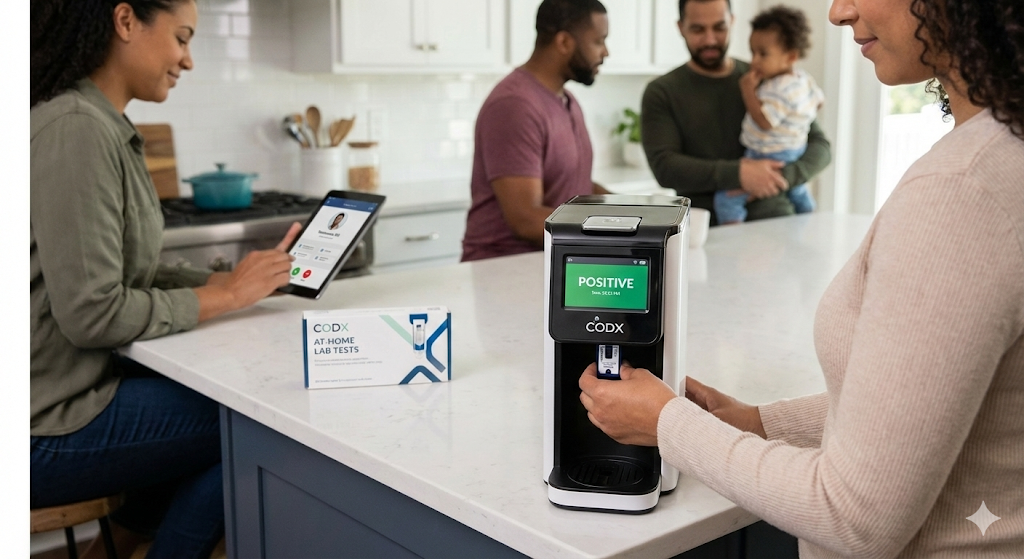
The Co-Dx PCR platform is not simply another laboratory instrument; it is an attempt to re-engineer how molecular testing is delivered. By combining the company’s patented Co-Primer technology with compact hardware such as the Co-Dx PCR Pro and future at-home variants, Co-Diagnostics aims to move high-quality PCR diagnostics out of centralized labs and into clinics, pharmacies, remote health settings, and eventually consumer environments.
This structural shift matters because it addresses one of the biggest inefficiencies in global healthcare diagnostics: the lag between sample collection and actionable results. Traditional PCR workflows require transport, batching, and specialized personnel, which delays diagnosis and increases cost. By enabling decentralized testing with lab-grade performance, Co-Diagnostics targets a growing market segment focused on point-of-care diagnostics and rapid decision-making.
Intellectual Property Is Becoming a Core Strategic Asset
The recent grant of an Australian patent covering key elements of the Co-Dx PCR platform is a meaningful milestone in Co-Diagnostics’ long-term strategy. It represents the first granted patent for the new platform and provides broad protection for the system’s design and methods in a major healthcare market. This strengthens the company’s global intellectual property position and reduces the risk of technological commoditization as competitors attempt to enter the decentralized PCR testing space.
Intellectual property in molecular diagnostics is not merely defensive. It is foundational to future commercial negotiations, regulatory positioning, and partnership discussions. By securing patents in strategically important regions such as Australia, Co-Diagnostics enhances its ability to pursue distribution agreements, joint ventures, and licensing arrangements while protecting its economic upside.
Public Health Demand Is Driving Structural Growth in Diagnostics
The global diagnostics market is undergoing a structural expansion driven by recurring viral outbreaks, seasonal respiratory illness, and heightened awareness of disease surveillance. Healthcare systems now view testing not as a reactive service but as a proactive infrastructure investment. This shift increases demand for reliable PCR diagnostics that can be deployed quickly and widely.
Co-Diagnostics is positioned to benefit from this trend because its platform aligns directly with healthcare priorities such as early detection, outbreak monitoring, and rapid clinical response. As testing becomes embedded into routine care rather than episodic crisis response, companies that offer scalable and accessible molecular diagnostics platforms gain long-term relevance.
The Pipeline Extends Beyond Infectious Disease Testing
Although infectious disease diagnostics represent the company’s current commercial focus, Co-Diagnostics has emphasized that its technology is applicable beyond viral and bacterial detection. The same nucleic acid analysis framework can be used to identify genetic markers associated with oncology, inherited disease, and pharmacogenomics.
This creates optionality within the business model. As regulatory approvals expand and assay development continues, the company could gradually transition from being viewed solely as an infectious disease testing company to a broader precision diagnostics platform. That shift would expand addressable markets and reduce reliance on cyclical outbreak-driven demand.
Financial and Strategic Optionality Support a Long-Term Bullish Case
Co-Diagnostics has maintained a balance between innovation and financial discipline by focusing on platform development that can support multiple revenue streams rather than isolated product launches. This platform-centric strategy increases the probability that investments in R&D and intellectual property will yield compounding returns over time.
As regulatory pathways progress and new markets open, the company retains strategic flexibility to pursue commercialization independently, partner with established diagnostics distributors, or license its technology in select regions. Each of these options provides potential upside without requiring the company to overextend operationally.
Why Co-Diagnostics Represents a Structural Rather Than Cyclical Opportunity
Many healthcare stocks rise and fall with specific product cycles or crisis-driven demand spikes. Co-Diagnostics, by contrast, is building infrastructure rather than chasing events. Its focus on decentralizing PCR testing, securing intellectual property, and expanding platform applicability suggests a structural growth thesis rooted in long-term healthcare trends.
This makes the investment case for Co-Diagnostics less about short-term earnings fluctuations and more about whether the company successfully becomes a foundational player in the future diagnostics ecosystem.
The Long-Term View on Co-Diagnostics Stock
For investors evaluating Co-Diagnostics stock, the core question is not whether a single test will succeed, but whether decentralized molecular diagnostics will become a standard component of healthcare delivery. If that future materializes, Co-Diagnostics is positioned as one of the companies building the underlying infrastructure for that transformation.
The combination of proprietary PCR technology, expanding intellectual property, alignment with public health trends, and platform-level optionality creates a risk-reward profile that favors patient capital over short-term speculation.
Final Thought
Co-Diagnostics is not a momentum story. It is an infrastructure story. It is about building the tools that enable faster, better, and more accessible medical decision-making at scale.
That kind of transformation rarely looks exciting in early stages, but it often proves essential in hindsight.
READ ALSO: Could UnitedHealth Group (UNH) Be the Safest Way to Invest in Healthcare Growth? and SELLAS Life Sciences Group (SLS) Just Took a Big Step Toward Changing How Cancer Is Treated.