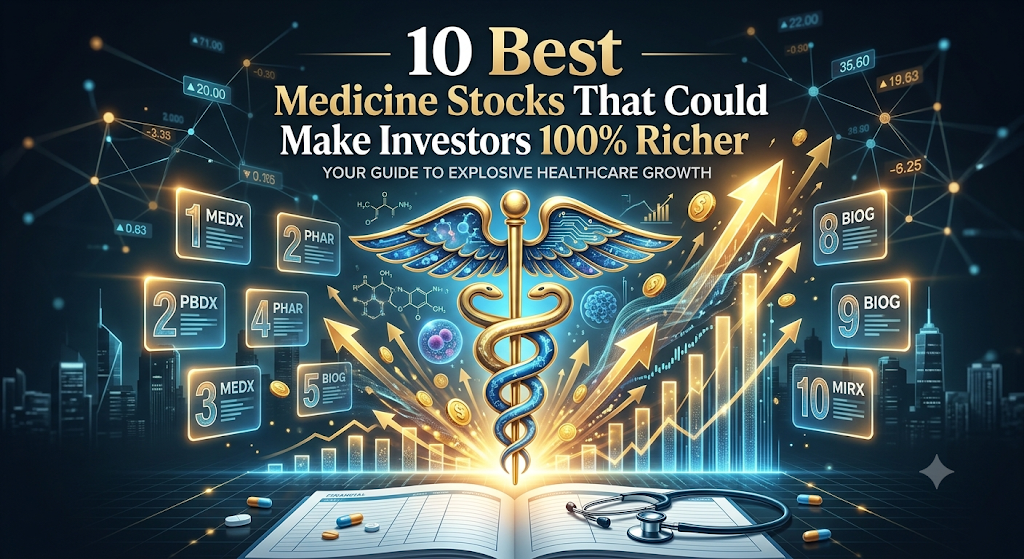

In this article, we will take a look at the 10 Best Medicine Stocks That Could Make Investors 100% Richer.
Wall Street has never been short of exciting investment themes. Artificial intelligence can dominate the headlines one month, semiconductor stocks can take over the next, and a sudden surge in energy prices can quickly push oil and gas companies back into the spotlight. Yet beneath all the market noise sits an industry built around a demand that does not disappear when consumer confidence falls, interest rates rise or economic growth slows: people still need medicine.
That simple reality is one reason the search for the top 10 best medicine stocks continues to attract long-term investors. Pharmaceutical companies, biotechnology firms and other healthcare stocks operate in a market shaped not merely by consumer preferences, but by aging populations, chronic diseases, medical breakthroughs and the continuing need for better treatments. Patients may postpone buying a new car or upgrading a smartphone, but they generally cannot postpone essential cancer treatment, insulin, heart medication or therapy for a serious autoimmune disease.
The size of the opportunity is already enormous. IQVIA projects that global medicine spending could exceed approximately $2.6 trillion by 2030, representing annual growth of around 5% to 8%. That forecast is particularly notable because it comes during a period marked by drug-pricing pressure, regulatory uncertainty, patent expirations and changing healthcare policies. Oncology, immunology, diabetes and obesity medicines are expected to remain among the largest contributors to pharmaceutical market growth through the end of the decade.
Those numbers help explain why the best pharmaceutical stocks are often viewed as more than defensive investments. The strongest companies can combine the resilience of the healthcare sector with the growth potential normally associated with technology companies. A single successful medicine can generate billions of dollars in annual revenue, fund years of additional research and transform the financial outlook of the company that developed it.
Of course, the opposite is also true. A failed clinical trial can erase years of work and billions of dollars in potential market value. A regulatory delay can send a biotechnology stock sharply lower before the opening bell. A promising treatment can lose commercial momentum when a competitor produces better results, offers more convenient dosing or secures broader insurance coverage. Medicine stocks can therefore look stable from a distance while hiding considerable scientific, regulatory and financial risk beneath the surface.
That contradiction makes the pharmaceutical sector unusually fascinating. It sells products that may be essential to human life, yet its biggest winners and losers are frequently determined by clinical data that most ordinary investors never read. It is both a defensive industry and a high-stakes innovation race. It can offer dependable dividend stocks, speculative biotech stocks, established blue-chip healthcare companies and aggressive growth stocks—all within the same broad sector.
The Business of Turning Science Into Blockbuster Revenue
The pharmaceutical industry follows an unusual business model. A conventional manufacturer can design a product, build a factory, begin selling and gradually improve the item based on customer feedback. A medicine developer may spend years studying a molecule before it is ever tested in humans. Even after a treatment enters clinical trials, it must still demonstrate an acceptable balance of safety and effectiveness before regulators will consider allowing it onto the market.
Early-stage studies generally focus on safety, dosage and how a potential treatment behaves inside the body. Later trials attempt to determine whether it actually works in a larger group of patients. The pivotal stage can involve hundreds or even thousands of participants across multiple hospitals and countries. Positive results may lead to a regulatory submission, but approval is still not guaranteed. Manufacturing quality, labeling, side effects, trial design and the strength of the supporting evidence can all affect the final decision.
This lengthy process is one reason a successful medicine can become extraordinarily valuable. The company is not simply selling a tablet, injection or infusion. It is monetizing years of scientific research, intellectual property, clinical testing, manufacturing expertise and regulatory work. Once a medicine receives approval and gains acceptance among physicians, patients and insurers, the revenue can expand rapidly.
The pharmaceutical industry commonly uses the term “blockbuster drug” for a medicine generating at least $1 billion in annual sales. The expression may sound like it belongs in Hollywood, but it captures the same basic idea: one major hit can change an entire company. A single blockbuster medicine can support dividends, share repurchases, acquisitions and the development of the next generation of treatments.
Modern blockbuster opportunities are no longer limited to enormous patient populations. Some medicines treat relatively small groups of people but command high prices because they address rare, severe or previously untreatable diseases. Others serve millions of patients and generate revenue through enormous prescription volume. This means the best medicine stocks may succeed through very different strategies. One company may dominate a mass-market chronic disease, while another builds a profitable franchise around several highly specialized rare-disease therapies.
The U.S. Food and Drug Administration approved 46 novel drugs in 2025, referring to medicines that had never previously been approved or marketed in the United States. Those approvals covered a wide range of conditions, illustrating how pharmaceutical innovation extends far beyond the diseases that usually dominate financial headlines.
However, an approval does not automatically create a commercial success. The medicine must still compete for physician attention, insurance coverage, hospital access and patient trust. A clinically effective product can struggle if it is difficult to administer, too expensive, poorly differentiated or launched into an already crowded market. That is why investors examining the best drug stocks must look beyond the headline announcing that a treatment has received regulatory clearance.
A Patent Can Be a Pharmaceutical Company’s Most Valuable Clock
One of the most important pieces of trivia about medicine stocks is that their greatest asset often comes with an expiration date. Patents and other forms of regulatory exclusivity give drugmakers a limited period during which competitors cannot freely market identical versions of a protected treatment. During that window, a successful pharmaceutical company may enjoy high margins and strong pricing power.
But the clock never stops.
When exclusivity ends, generic drugs or biosimilars can enter the market and offer lower-priced competition. Sales of the original branded medicine may then decline rapidly. Investors call this the “patent cliff” because revenue can fall sharply rather than gradually once a major product loses protection.
The industry is approaching an especially important wave of patent expirations. IQVIA estimates that the coming expiry cycle could result in nearly $200 billion in branded medicine losses, creating a major test for established pharmaceutical companies. Evaluate has described the broader challenge as a looming patent cliff involving hundreds of billions of dollars in revenue exposure.
This does not necessarily mean that every company facing patent expirations should be avoided. Mature pharmaceutical firms have dealt with this cycle for generations. The better question is whether a company has enough new products, promising clinical programs and strategic acquisitions to replace the revenue that may disappear.
A drugmaker with a famous blockbuster but a weak research pipeline may be less attractive than it first appears. In contrast, a company approaching a major patent loss may still represent one of the best pharmaceutical stocks to buy if several new medicines are gaining momentum. Investors must therefore examine not only what a company earns today, but what its product portfolio could look like three, five or even ten years from now.
This is also why pharmaceutical mergers and acquisitions occur so frequently. Large drugmakers with strong cash flow but aging product portfolios often purchase smaller biotechnology companies that possess promising experimental medicines. The smaller company receives capital and commercial resources, while the larger company gains a potential source of future revenue.
In simple terms, Big Pharma sometimes buys innovation because discovering every future blockbuster inside one laboratory is nearly impossible.
Obesity Medicines Have Rewritten the Pharmaceutical Growth Playbook
Few developments have changed the modern healthcare investment landscape as dramatically as the rise of obesity medicines. Obesity was once treated primarily as a lifestyle issue in the public imagination. It is increasingly recognized as a chronic medical condition linked to cardiovascular disease, diabetes, sleep apnea and numerous other health complications.
The commercial transformation has been remarkable. IQVIA estimated that the global obesity medicine market reached approximately $66 billion in list-price sales during 2025 and could rise to about $92 billion in 2026. Longer-term estimates remain wide because the ultimate market will depend on pricing, insurance coverage, manufacturing capacity, competition and the number of patients who remain on treatment.
The next stage of the obesity drug race is expected to extend beyond simple weight-loss percentages. Pharmaceutical companies are studying oral medicines, less frequent injections, combination therapies, long-term maintenance treatments and products designed to preserve muscle while reducing body fat. Future competition may also focus on additional health benefits, including cardiovascular protection, kidney outcomes and improvements in obesity-related conditions.
For investors, this creates both opportunity and danger. The addressable market is enormous, but competition is becoming increasingly intense. A medicine that looks impressive today may appear less differentiated when a rival introduces a more effective, safer, cheaper or easier-to-use alternative.
This is a recurring pattern throughout the pharmaceutical industry. The first company to enter a large market can gain an enormous advantage, but leadership is rarely permanent. Scientific innovation continually changes the definition of the best available treatment.
Cancer, Immunology and Rare Diseases Continue to Drive Innovation
Obesity treatments may generate the loudest headlines, but oncology remains one of the most important engines of pharmaceutical research and spending. Cancer is not one disease but a large collection of diseases defined by different mutations, biological pathways and responses to treatment. This complexity has encouraged the development of targeted therapies, immunotherapies, antibody-drug conjugates and increasingly personalized treatment strategies.
An older generation of cancer drugs often attacked rapidly dividing cells throughout the body, which could damage healthy tissue along with tumors. Newer treatments increasingly attempt to identify specific vulnerabilities within a patient’s cancer. Some medicines help the immune system recognize and attack malignant cells. Others deliver a toxic payload more directly to the tumor. Still others target a mutation that may exist only in a particular subgroup of patients.
This precision can produce better outcomes, but it also makes the pharmaceutical market more fragmented. Instead of developing one medicine for every patient with a certain type of cancer, a company may develop separate treatments for patients with different genetic markers. The potential patient population becomes smaller, yet the clinical value of a highly targeted medicine may become greater.
Immunology represents another major growth area. The immune system protects the human body, but when it becomes overactive or misdirected, it can contribute to diseases such as rheumatoid arthritis, psoriasis, inflammatory bowel disease and lupus. Many of these conditions require long-term treatment, making successful immunology drugs commercially attractive.
Rare diseases offer a different investment thesis. Individually, each condition may affect only a small population, but thousands of rare diseases have been identified, and many still lack approved treatments. A company that successfully develops the first effective medicine for a serious inherited disorder may face limited competition and strong demand from patients, specialists and advocacy groups.
Gene therapy, RNA-based medicines and advanced biologics have expanded what scientists believe may be treatable. These technologies also introduce new questions involving durability, manufacturing complexity, safety and cost. A one-time treatment that corrects the underlying cause of a disease could be medically revolutionary, but determining how healthcare systems should pay for that treatment is a separate challenge.
Medicine Stocks Are Defensive—Until the Clinical Data Arrive
Healthcare is traditionally considered a defensive sector because demand for medical treatment tends to remain relatively stable throughout economic cycles. People do not stop developing cancer during a recession, and patients do not suddenly stop needing diabetes medication because the stock market has declined.
That defensive reputation can make large pharmaceutical stocks attractive during periods of economic uncertainty. Many established drugmakers generate substantial free cash flow, maintain diversified product portfolios and pay regular dividends. Their balance sheets may also allow them to continue funding research or acquiring promising assets even when smaller biotechnology companies struggle to raise capital.
However, the label “defensive” can be misleading when applied to every medicine stock. A large pharmaceutical company with dozens of products behaves very differently from a small biotechnology company whose future depends on one experimental treatment.
A clinical-stage biotech stock may have little or no product revenue. Its market valuation may depend almost entirely on whether an upcoming trial succeeds. Positive data can multiply the share price, while disappointing results can destroy most of the company’s value within minutes. These companies may offer enormous upside, but they should not be mistaken for stable healthcare investments.
The best medicine stocks therefore cannot be ranked using a single formula. Dividend yield may matter for a mature pharmaceutical company but mean almost nothing for a pre-revenue biotechnology firm. Revenue growth may be crucial for a recently launched medicine, while cash runway and trial design may be more important for an early-stage developer.
Investors must compare each company with the right set of expectations.
The Details Hidden Behind an “FDA Approval”
Regulatory approval is one of the most powerful catalysts in pharmaceutical investing, but it is often misunderstood. An approval announcement may sound like the finish line, yet it is usually the beginning of a new commercial race.
The approved label determines which patients can receive the medicine and under what circumstances. A narrow label may limit the addressable market, while a broader label can produce a much larger commercial opportunity. The medicine’s safety warnings, dosing schedule and monitoring requirements can also influence how readily doctors prescribe it.
Insurance reimbursement may matter just as much as regulatory approval. A treatment can be legally available but financially inaccessible to many patients. Pharmaceutical companies must frequently negotiate with insurers, pharmacy benefit managers, national health systems and hospital networks before a product can achieve broad adoption.
Manufacturing is another overlooked variable. Demand is valuable only when the company can produce enough medicine to satisfy it. Complex biologics, cell therapies and injectable products can be far more difficult to manufacture than conventional tablets. Supply shortages can limit revenue precisely when market interest is strongest.
Even the route of administration can become a competitive advantage. Many patients would prefer a tablet over an injection, an injection over an infusion and a monthly dose over a weekly or daily treatment. A medicine does not always need to be dramatically more effective to gain market share. Greater convenience can sometimes be enough.
These operational details help separate a promising drug from a promising stock. A medicine may be scientifically impressive, yet the company behind it must still manufacture, price, distribute and market the product effectively.
Artificial Intelligence Is Entering the Laboratory, but Biology Still Sets the Rules
Artificial intelligence has become another major investment narrative within the pharmaceutical sector. Drug discovery involves analyzing enormous amounts of chemical, biological and clinical information, making it a logical field for advanced computing.
AI tools may help researchers identify promising molecules, predict how compounds could interact with biological targets, improve trial recruitment and detect patterns within patient data. In theory, these systems could reduce wasted laboratory work and help companies make better decisions earlier in the development process.
Yet the industry still faces one stubborn reality: an algorithm can propose a medicine, but the human body must ultimately prove whether it works.
Biology is extraordinarily complex. A molecule that appears promising in a computer model may perform poorly in animals or humans. A treatment may reach its intended target yet cause unexpected side effects elsewhere in the body. AI can improve the odds and accelerate certain tasks, but it cannot eliminate the need for carefully designed clinical trials.
For that reason, investors should be cautious when a pharmaceutical or biotechnology company is valued primarily on the phrase “AI-powered drug discovery.” The technology may be useful, but the value of a medicine stock still depends on intellectual property, clinical evidence, regulatory progress, financial resources and the commercial relevance of its pipeline.
CHECK THIS OUT: 10 Biotech Stocks That Could Turn Medicine Into Wall Street’s Next Gold Rush and Top 10 AI-Powered Healthcare Stocks That Can Make You Rich.
Our Methodology
To develop this ranking of the 10 best medicine stocks that could make investors 100% richer, the companies were evaluated based on their latest revenue and earnings performance, product demand, clinical pipeline strength, recent FDA approvals, competitive position, patent-expiration risks, dividend stability and long-term growth potential. Greater weight was given to companies with strong commercial momentum, multiple growth drivers and a favorable balance between financial strength and investment risk.
10 Best Medicine Stocks That Could Make Investors 100% Richer
10. Pfizer Inc. (NYSE:PFE)
Pfizer Inc. (NYSE: PFE) takes the tenth position because it remains one of the world’s most recognizable pharmaceutical companies, but its near-term financial outlook is less compelling than those of the higher-ranked medicine stocks on this list. The company expects 2026 revenue between $59.5 billion and $62.5 billion, compared with its approximately $62 billion revenue expectation for 2025. Management anticipates that declining demand for COVID-19 products could reduce annual revenue by approximately $1.5 billion, while the loss of exclusivity for several medicines may remove another $1.5 billion. Excluding COVID-19 products and medicines affected by patent expirations, the underlying portfolio is expected to deliver operational growth of approximately 4%. That is respectable for a company of this scale, but it does not place the drugmaker among the pharmaceutical industry’s fastest-growing businesses.
The company’s investment case increasingly depends on whether its large research budget and acquired oncology portfolio can produce a new generation of blockbuster medicines. Pfizer Inc. (NYSE: PFE) expects to spend between $10.5 billion and $11.5 billion on adjusted research and development expenses in 2026. Its priorities include a PD-1 and VEGF bispecific antibody licensed from 3SBio, cancer medicines acquired through Seagen and clinical programs obtained through Metsera. The strategy makes sense because oncology remains one of the pharmaceutical industry’s largest and most durable markets. Nevertheless, drug development rarely moves in a straight line. In June 2026, the Phase 3 SigVie-002 study of sigvotatug vedotin failed to demonstrate a statistically significant overall-survival advantage over docetaxel in the broader population of previously treated patients with metastatic non-small cell lung cancer. A more encouraging trend appeared among patients treated after only one prior line of therapy, allowing the program to continue in other settings, but the result was another reminder that promising scientific assets do not always become successful commercial products.
Income investors may still find something appealing in Pfizer Inc. (NYSE: PFE). The company declared a quarterly dividend of $0.43 per share for the second quarter of 2026, marking its 350th consecutive quarterly dividend. That history gives the stock credibility as a pharmaceutical dividend investment, particularly for investors prepared to wait through a multiyear turnaround. The problem is that a high dividend alone cannot replace durable earnings growth. The company must prove that cost reductions, oncology expansion and pipeline investments can offset shrinking COVID-19 sales and approaching patent losses. Pfizer Inc. (NYSE: PFE) remains financially powerful and globally relevant, but among the best pharmaceutical stocks to watch in 2026, it currently carries more turnaround risk than the other companies in this ranking.
Click next to see the following stock...