We recently published our article Top 10 Cancer Biotech Small-Caps That Could Shock the Market Next. This piece looks at Nkarta Inc. (NASDAQ:NKTX) as cancer biotech sentiment firms on renewed risk appetite and investors refocus on differentiated pipelines with meaningful upcoming catalysts that can change the company’s trajectory fast.
Cancer biotech has a funny habit: it can go quiet for months, then hijack the entire market in a single morning with one line of text—“met primary endpoint.” That’s not hype, that’s the business model. Oncology drug development is built around proof, and Wall Street prices proof with the emotional range of a weather app in a hurricane. One clean dataset can turn a forgotten small-cap biotech into the most talked-about ticker on NASDAQ or New York Stock Exchange, and one messy readout can erase a year of optimism before lunch. If you’ve been around the biotech tape long enough, you learn this simple rule: in cancer biotech, the calendar matters as much as the science. The real “earnings season” is often the stretch of Phase 2 results, Phase 3 topline data, and regulatory milestones that force investors to stop guessing and start pricing probabilities.
The Odd Trivia That Explains Why Small-Cap Oncology Stocks Move So Violently
Here’s a piece of trivia most people don’t think about until they’re staring at a biotech chart: cancer is not one disease, and “oncology” isn’t one market. It’s dozens of battlefields—solid tumors and hematologic malignancies, first-line and refractory settings, biomarker-defined subgroups, combination regimens, maintenance therapy, and the never-ending chess match of resistance. That complexity is exactly why oncology biotech stocks keep producing surprise winners. A therapy doesn’t need to cure everything; it needs to work clearly in the right slice of patients, with the right dosing, and the right safety profile. When that happens, the commercial runway can be real even if the initial indication is narrow, because success in one tumor type can open doors to label expansion, combinations, and adjacent indications.
Small-cap cancer biotech companies amplify this effect because their valuation is often concentrated in one or two core programs. That concentration is what investors mean when they talk about “asymmetric upside” in biotech stocks. A multi-billion-dollar pharma can absorb a failed trial. A small-cap oncology developer often can’t—and that’s precisely why it can shock the market next if the data lands the right way. The move isn’t just about revenue forecasts; it’s about probability rerating. The market goes from “maybe” to “measurable,” and the stock reprices like it’s waking up in a different universe.
Why “Clinical Catalysts” Are the Real Currency in Biotech Investing
In normal industries, investors obsess over sales cycles, margins, and guidance. In clinical-stage biotech, especially oncology, the language is different: primary endpoint, hazard ratio, durability of response, safety/tolerability, response rate, progression-free survival, overall survival, and whether the trial design matches what regulators and clinicians actually respect. That’s why biotech investors sound like part-time statisticians. A “major clinical catalyst” isn’t just news—it’s an evidence drop that changes the odds.
And yes, the U.S. Food and Drug Administration has a starring role in this drama. FDA approval, accelerated approval discussions, and PDUFA-style timelines are the moments when the market stops debating narrative and starts debating outcomes. If you’re trying to rank cancer biotech small-caps that could shock the market next, you’re really ranking schedules of truth: imminent trial readouts, regulatory decisions, and conference-driven data presentations that force the market to take a side.
The Not-So-Secret Reason These Names Can “Shock the Market”
Another trivia point that separates casual biotech watchers from seasoned ones: in oncology, “good enough” can be transformative. A drug doesn’t have to be perfect to win. It has to be meaningfully better than existing options in a setting where doctors are hungry for something that actually moves the needle. That’s why targeted therapy, precision oncology, antibody-drug conjugates, immunotherapy combinations, cell therapy, and next-generation oncology platforms keep producing these abrupt repricings. The bar isn’t “magic.” The bar is “clinically meaningful,” “statistically credible,” and “commercially adoptable.”
This is where small-cap biotech stocks get their torque. When a company shows a signal that looks reproducible—clean dose-response, consistent benefit across subgroups, manageable safety—investors don’t just model one indication. They start modeling the platform’s right to exist. And that’s when a market cap that looked tiny yesterday starts to look “wrong,” because the addressable opportunity suddenly feels larger and closer.
The Balance Sheet Angle Most People Miss Until It Matters
There’s a reason serious biotech investors keep one eye on the science and the other on the balance sheet. Oncology trials are expensive, timelines are unforgiving, and the market has zero mercy for companies that run out of cash right before a catalyst. So when we talk about “leverage” in small-cap cancer biotech, we’re not talking about debt-fueled financial engineering. We’re talking about runway. Cash runway. Optionality. The ability to reach the next readout without financing panic.
That’s why concepts like market cap, enterprise value, and net cash matter in this list. A company with a relatively low enterprise value versus market cap often has a bigger net-cash cushion, which can reduce near-term dilution risk and give management more flexibility to execute. It doesn’t guarantee success—nothing in cancer drug development does—but it changes the risk profile in a way that the market often rewards when catalysts approach.
What This Article Is Really About
This article isn’t pretending to predict the future with certainty—biotech doesn’t reward that kind of arrogance. What it does is map where the next shocks can come from in the cancer biotech landscape by focusing on small-cap oncology stocks with the kind of setups that historically create violent repricings: meaningful clinical catalysts, credible trial design, real shots on goal, and balance-sheet survivability. The companies on this watchlist sit in that sweet spot where expectations are still fragile enough to be surprised, but the catalyst calendar is loud enough to force a verdict.
If you’ve ever watched a biotech stock triple on a random Tuesday and wondered how anyone saw it coming, the answer is usually boring: somebody was tracking the timeline, the endpoints, the cash runway, and the odds—and they understood that in oncology, the market doesn’t move on vibes. It moves on data.
The Keywords Investors Keep Searching—Because They’re Actually the Rules of the Game
If you’re researching cancer biotech stocks to watch, oncology biotech small-caps, clinical-stage biotech companies, biotech catalysts, Phase 2 results, Phase 3 topline data, FDA approval risk, PDUFA timelines, immunotherapy stocks, targeted therapy, precision oncology, antibody-drug conjugates, CAR-T competitors, and biotech market cap rankings, you’re already speaking the language of how these stocks reprice. This introduction is built around the same reality: in 2026, the biggest market surprises often won’t come from the safest companies—they’ll come from the small-cap cancer biotech names where one dataset can flip the entire narrative.
CHECK THIS OUT: Why Crinetics Pharmaceuticals (CRNX) Is the “Slow Burn” Biotech Investors Love and Lexicon Pharmaceuticals (LXRX) Proves That Boring Science Can Still Move Markets.
Our Methodology
We screened U.S.-listed oncology and cancer-focused biotech stocks on the NYSE and NASDAQ and filtered for small-caps using current market capitalization, then narrowed the universe to companies with identifiable near-term value drivers such as upcoming clinical trial readouts, regulatory milestones, or meaningful program updates that could reprice expectations. We ranked the final ten from lowest to highest market cap for a clean, consistent size-based list, and we sanity-checked each pick using practical “shock potential” signals including enterprise value versus market cap (net-cash optionality), cash runway and dilution risk, liquidity/trading volume, pipeline concentration and trial stage, and the presence of clear catalyst timing rather than vague long-dated promises.
3. Nkarta Inc. (NASDAQ:NKTX)
Market Cap: $144.90M
Leverage: 141.96%
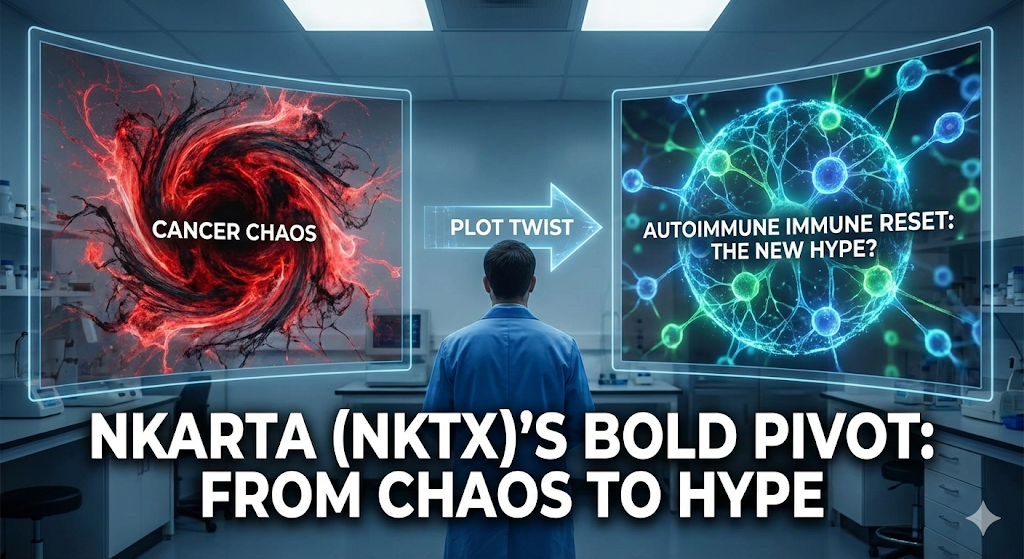
Nkarta Inc. (NASDAQ:NKTX) is no longer trying to win the “next big oncology cell therapy” race the way it was originally framed years ago. The bullish thesis in 2026 is built around something much cleaner: Nkarta has deliberately pivoted its engineered natural killer cell therapy platform away from crowded cancer settings and toward B cell–mediated autoimmune diseases, where the clinical need is massive and where “immune reset” approaches are starting to look like a real category, not a science project.
That strategic shift matters because it changes how investors should analyze NKTX stock. In oncology, the bar is brutally high and the competitive landscape is unforgiving. Nkarta’s earlier oncology experience created skepticism and forced a reset, which is exactly why the market has been willing to price the company at a depressed level for an extended period. In autoimmune disease, the prize is different: durable remissions, reduced chronic immunosuppression, and potentially fewer lifelong maintenance therapies. That’s a market where a credible “one-time” or infrequent dosing paradigm can be genuinely disruptive if safety and depth of response hold.
This is why the story has become more interesting recently even as the share price has stayed under pressure: the company is trying to create value through proof-of-concept clinical data, not through hype. And importantly, Nkarta has framed its balance sheet as strong enough to run this plan for multiple years, which reduces near-term dilution pressure versus many small-cap biotech peers and allows the company to focus on generating real datasets.
What Nkarta actually is now: an autoimmune CAR-NK company, not an oncology lottery ticket
The core truth investors search for—“what does Nkarta do?”—has a clearer answer today than it did during the company’s earlier oncology-heavy era. Nkarta is developing an allogeneic, off-the-shelf CAR-NK cell therapy called NKX019 that targets CD19, aiming to eliminate pathogenic B cells that drive multiple autoimmune diseases.
That CD19 angle is not random. CD19 is broadly expressed across B cell lineages, and B cells are central in several autoimmune conditions through autoantibody production, antigen presentation, and immune dysregulation. Nkarta’s thesis is that deep B-cell depletion can enable a meaningful “reset” of the immune system and potentially unlock drug-free remissions—an outcome that would be extremely valuable in diseases where patients often cycle through biologics, steroids, and other immunosuppressants for years.
NKX019 is positioned as a cryopreserved, donor-derived, “off-the-shelf” NK cell therapy with a CD19-directed CAR plus an engineered feature intended to improve persistence and activity. The practical investing point is that Nkarta is trying to build a simpler, more scalable cell therapy model than classic autologous CAR-T workflows, which could fit autoimmune care better if the safety profile is clean and the immune effect is reliable.
The clinical engine: Ntrust trials and the “immune reset” readthrough
Nkarta’s near-term value is mostly a function of clinical execution and clinical readouts—classic clinical-stage biotech math. The key programs investors should care about are the Ntrust trials and related investigator-sponsored studies.
The company has described Ntrust-1 as a Phase 1 trial in lupus nephritis, and Ntrust-2 as a Phase 1 trial enrolling systemic sclerosis, idiopathic inflammatory myopathy, and ANCA-associated vasculitis, alongside investigator-sponsored studies that expand NKX019 into systemic lupus erythematosus and myasthenia gravis.
From a bullish perspective, this design creates a high-leverage “readthrough” setup: if NKX019 can show a consistent safety profile and meaningful B-cell depletion with early signals of clinical benefit in one or more of these indications, it strengthens the argument that the mechanism is broadly applicable across multiple B cell–mediated autoimmune diseases. That’s how a small-cap biotech stock can re-rate—investors start pricing the platform rather than a single narrow indication.
A quiet but important upgrade: better trial speed and a stronger mechanistic signal
A big part of why 2026 is pivotal for the Nkarta story is not just enrollment—it’s that Nkarta has been adjusting trial execution to move faster and learn more efficiently. In a corporate update during 2025, the company described steps that streamlined enrollment operations across Ntrust-1 and Ntrust-2, reducing friction in how cohorts could be dosed and monitored under safety oversight.
More importantly, Nkarta highlighted a biologic signal investors tend to overweight (for good reason): deep B-cell depletion. The company discussed that patients receiving NKX019 with a specific lymphodepletion regimen achieved complete B-cell depletion in those treated to date, compared with partial depletion in patients receiving a different lymphodepletion approach.
Even before you get to “does this improve symptoms,” showing that the regimen reliably drives the intended immune effect is a major de-risking step. If you can’t consistently achieve target engagement in early cohorts, everything else becomes shaky. If you can, the story becomes about durability, safety, and clinical outcomes—much better problems to have.
Why 2026 data can matter more than a typical biotech update
Nkarta has indicated that it expects to share initial NKX019 data across multiple autoimmune indications in 2026. That sounds routine until you consider the setup: this is a company whose earlier oncology phase left lingering skepticism, and whose market perception has been shaped by the idea that “cell therapy stories overpromise.”
In that context, a credible dataset can do two things at once. First, it can validate that CAR-NK (and specifically NKX019) can be administered with an acceptable safety profile in autoimmune populations—where tolerability expectations can be different than late-line oncology. Second, it can begin to answer the killer question for autoimmune cell therapy: can you create meaningful remission without chaining patients to chronic therapy?
Even modest early signals—paired with clean safety and strong mechanistic proof—can be enough to shift analyst and investor attention, because it reframes Nkarta as an “immune reset” platform play rather than a single-asset gamble.
The balance sheet is part of the thesis, not a footnote
A lot of small-cap biotech bullish theses collapse on one issue: funding. If a company needs to raise cash every 6–12 months, shareholders get diluted before the story matures.
Nkarta has communicated that it expects its cash resources to fund operations into 2029, and it has previously reported a cash and investments position that is unusually large relative to many peers at a similar market value. It has also described a restructuring and cost reset intended to extend runway and prioritize the autoimmune program.
This matters because it allows the company to do what early-stage biotechs must do to win: run trials properly, follow the data, and avoid “capital markets panic” decision-making. A longer runway increases the probability that Nkarta can complete meaningful cohorts, present data in an orderly way, and iterate on regimen design without being forced into rushed strategic moves.
Why the market might be mispricing NKTX stock
When a company is priced like a distressed asset, you don’t need perfection to get upside—you need “less bad than feared,” plus one or two credible proof points that the new strategy is working.
Nkarta has been trying to clear those proof-point hurdles in a way the market can eventually respect: tighter focus, faster trial mechanics, and mechanistic signals like deeper B-cell depletion after regimen optimization. It has also had periods of heightened investor sensitivity around insider trading optics and strategic shifts, but these are common in micro-cap biotech and usually fade quickly if the clinical data begins to speak loudly.
The setup is essentially this: the stock is priced with skepticism, but the company is building toward a data moment that can rewrite the narrative if the results are coherent.
The real prize: autoimmune disease is a massive, durable market where “immune reset” is valuable
Autoimmune diseases are not niche. They are chronic, costly, and often treated with drugs that manage symptoms rather than reset disease biology. Many patients face years of treatment cycling, incomplete responses, and cumulative side effects from broad immunosuppression.
Nkarta’s strategy of targeting B cell–mediated diseases is designed to exploit the idea that eliminating the key pathogenic B-cell populations may allow the immune system to reboot into a less self-attacking state. The company is also exploring multiple indications in parallel, which can help it quickly identify where the biology looks strongest without committing the entire platform to a single bet too early.
The bullish angle here is straightforward: if NKX019 can safely and repeatably produce meaningful B-cell depletion and show early remission signals in diseases like lupus nephritis or systemic sclerosis, that is not a “small win.” It’s a potential entry point into a multi-indication franchise where the upside is measured in platform value and partnership optionality, not just a single endpoint.
Risks you should not pretend away
Clinical risk remains the headline. Phase 1 trials can look promising and still fail to translate into durable, reproducible outcomes. Autoimmune populations may have different safety sensitivities than oncology populations, and regulators will demand rigor around durability, relapse patterns, infection risk, and real-world practicality.
Execution risk also matters. A leaner organization must still recruit patients, manage sites, manufacture product reliably, and produce high-quality datasets. Competitive risk is real too: many companies are chasing immune reset concepts in lupus and other autoimmune conditions using multiple modalities, including autologous and allogeneic approaches.
Finally, market risk is unavoidable. Even if Nkarta delivers decent data, investors may demand truly compelling clinical signals before assigning a premium valuation, given the history of cell therapy hype cycles.
The bullish conclusion: NKTX is a “data changes everything” setup in 2026
If you’re looking for a 2026 biotech stock idea built around asymmetric upside, Nkarta is the kind of name that can work—because the current narrative is still dominated by skepticism, while the company is building toward a specific catalyst: initial multi-indication autoimmune data in 2026, backed by a multi-year runway.
The cleanest bullish thesis is that this is a small-cap biotech that already paid the price for its earlier oncology missteps, has narrowed to a more rational target market, and is now showing the kind of mechanistic progress that makes early clinical programs investable again—deep B-cell depletion, improved trial execution mechanics, and a defined data timeline.
If the 2026 dataset shows a consistent safety profile, credible immune reset signals, and any early hints of durable benefit, the market won’t price Nkarta like a struggling micro-cap anymore. It will start pricing it like a platform company with real optionality across B cell–mediated autoimmune diseases, and that’s where the biggest upside usually comes from.
READ ALSO: Here’s Why Apogee Therapeutics (APGE) Is Suddenly on the Radar of Biotech Investors and Coeptis Therapeutics (COEP) Is Not Profitable Yet — and That’s Exactly Why It’s Interesting.
Disclosure: No relevant interests to disclose. This article was originally published on BioTech HealthX.