We recently published our article Top 10 Biotech Stocks With the Biggest Price Gains Today. This article examines where Oncology Institute Inc (NASDAQ:TOI) stands within a volatile biotech landscape, where regulatory progress and reset valuations are starting to attract renewed investor interest.
The biotechnology sector stands out in the broader market as one of the most dynamic and unpredictable corners of global equities. Fueled by breakthroughs in drug discovery, genetic engineering, and cutting-edge therapeutics, biotech is a realm where scientific progress can translate into explosive stock price moves — but it can also amplify risk when clinical data falls short of expectations. Unlike traditional industries driven primarily by macroeconomic factors, biotech performance hinges on scientific validation, regulatory milestones, and technological advancement, which together create a tapestry of both dramatic gains and steep drawdowns.
Throughout 2026, momentum in biotechnology has been accelerating as investors refocus on medical innovation after a challenging period, with renewed optimism taking shape across clinical trial activity, dealmaking, and early-stage research showcase events. A recent global industry forum highlighted how early-stage biotech companies are driving fresh capital engagement and strategic partnerships, underscoring why the sector remains a magnet for both long-term innovation investors and short-term catalysts-focused traders. As a result, biotech continues to capture outsized daily moves as capital flows toward areas like synthetic biology, personalized medicine, and AI-augmented drug discovery.
Why Biotech Stocks Can Become Today’s Biggest Gainers
Stocks in biotechnology often rise sharply in response to a wide range of catalysts that are much closer to the scientific process than to economic indicators. Clinical trial readouts, regulatory feedback, licensing agreements, and breakthrough therapeutic announcements can all spark intense buying pressure in a very short timeframe. In addition, the growing integration of artificial intelligence into drug development is reshaping expectations, enabling faster identification of viable drug targets and potentially shortening the timeline from hypothesis to clinical validation. These converging forces mean biotech stocks are prone to swift sector rallies, and names with compelling news or unexpected data can quickly lead daily performance charts.
Against this backdrop, companies involved in early-stage discovery platforms, cutting-edge biologics, or unique therapeutic approaches have been gaining attention from market participants. As the lines between tech and life sciences blur, novel biotech IPOs have returned to the public market, signaling renewed investor appetite for transformative science and signaling that 2026 may see a continued rebound in biotech deal activity after a slowdown in recent years.
The Broader Biotech Narrative Driving Market Interest
Investor sentiment around biotech has been evolving as broader life sciences trends gain traction. Key clinical trial milestones are now being watched closely across obesity, infectious diseases, and rare conditions, generating anticipation throughout the industry. Meanwhile, increased collaboration between scientific leaders, AI pioneers, and industrial partners is setting the stage for deeper innovation pipelines. Global events focusing on AI’s role in drug discovery and manufacturing are bringing major firms and startups together to address pressing challenges and scale breakthroughs into real-world solutions, reaffirming biotech’s place at the forefront of next-generation healthcare.
This shift in narrative has also been reflected in the IPO market, where new biotechnology companies are raising significant capital to advance experimental therapies. These developments serve as a reminder that, although biotechnology carries inherent uncertainty, it remains a frontier of scientific development capable of producing outsized returns when innovation meets execution. As attention shifts back toward late-stage clinical programs and registration-ready platforms, the sector’s capacity to generate both rapid price action and long-term breakthroughs continues to draw investor interest.
What It Means for Today’s Top Biotech Movers
Tracking the Top 10 Biotech Stocks With the Biggest Price Gains Today provides insight into where the market is reacting most strongly in real time. Stocks that top daily gain lists often reflect shifts in sentiment, catalytic scientific updates, or renewed investor focus on promising therapeutic advancements. While not every surge reflects a durable trend, many signal broader sector rotations or renewed interest in specific therapeutic niches. For investors seeking to understand how breakthroughs, regulatory developments, and sector momentum influence stock performance, today’s biggest biotech gainers offer a real-time glimpse into one of the most fast-moving and news-driven segments of the market.
CHECK THIS OUT: Why Crinetics Pharmaceuticals (CRNX) Is the “Slow Burn” Biotech Investors Love and Lexicon Pharmaceuticals (LXRX) Proves That Boring Science Can Still Move Markets.
Our Framework
Our ranking of the Top 10 Biotech Stocks With the Biggest Price Gains Today was compiled using real-time market data that tracked the highest percentage gainers within the biotechnology sector at the time of writing, with initial screening based on Stocktwits data highlighting stocks experiencing the strongest intraday price appreciation. To add analytical rigor, we cross-checked these movers against key market metrics including trading volume relative to recent averages, market capitalization, recent news flow or identifiable catalysts, and overall sector momentum to ensure the price action reflected meaningful investor interest rather than isolated or illiquid trades. This blended approach allows us to capture both short-term momentum and broader market context, offering readers a clear snapshot of where capital, attention, and volatility are converging in the biotech sector today.
Oncology Institute Inc (NASDAQ:TOI)
Market Cap: $241.03M
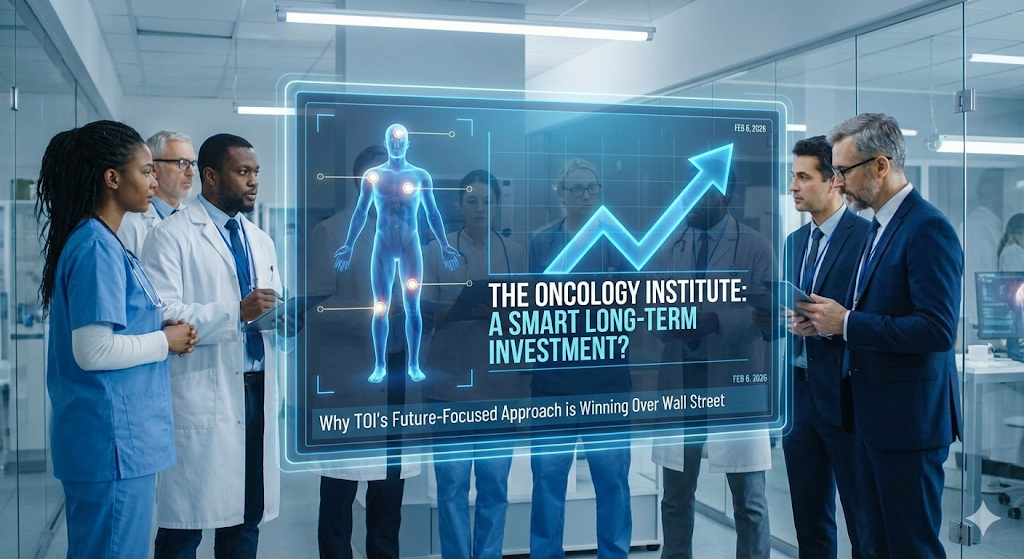
Ranking 8th in our list of the Top 10 Biotech Stocks With the Biggest Price Gains Today is Oncology Institute Inc (NASDAQ:TOI). The recent 26% drawdown in The Oncology Institute, Inc. (NASDAQ:TOI) has rattled short-term sentiment, but for patient investors, the selloff may be creating an unusually attractive entry point into a rapidly scaling oncology care platform that continues to outgrow its industry by a wide margin. While the stock has corrected sharply over the past month, it is easy to forget that TOI remains up nearly 200% year-over-year, underscoring that the longer-term trajectory of the business has not broken—even as volatility has returned.
At the core of the bullish case is TOI’s ability to deliver outsized revenue growth in a structurally advantaged healthcare niche. Oncology is not a discretionary service. Demand is driven by demographics, aging populations, and rising cancer incidence, providing a resilient backdrop even during periods of macro uncertainty. Against this backdrop, TOI has produced 22% revenue growth in the past year and nearly 100% cumulative growth over the past three years, a performance profile that clearly exceeds most peers in the broader healthcare services space.
What makes the current setup especially interesting is the disconnect between growth and valuation. Despite analyst expectations for 31% revenue growth over the next twelve months, far above the roughly 4–5% growth forecast for the overall healthcare industry, TOI trades at approximately 0.6x price-to-sales, well below the industry norm of over 1.2x. This implies that the market is either heavily discounting the sustainability of growth or pricing in execution risk that may already be reflected in the share price. If management simply executes in line with current expectations, that valuation gap has room to close.
The company’s operating model also strengthens the long-term thesis. TOI focuses on delivering community-based oncology care, a model that aligns closely with payer incentives to reduce hospital costs while maintaining quality outcomes. As value-based care models continue to expand, providers that can deliver specialized care at lower cost stand to benefit disproportionately. TOI’s scale and operational footprint position it well to capture that shift, particularly as payers and providers increasingly look for alternatives to high-cost hospital oncology settings.
Importantly, the recent decline appears more sentiment-driven than fundamentals-driven. There has been no corresponding collapse in revenue, guidance, or industry demand. Instead, the compression in valuation suggests investor skepticism and short-term uncertainty, not structural deterioration. History repeatedly shows that periods when fast-growing healthcare companies trade at depressed multiples often precede strong forward returns once confidence stabilizes.
That said, this is not a risk-free story. The market is clearly signaling concerns around execution, margins, or future volatility in revenues—concerns that should not be ignored. However, with price-to-sales already reflecting a pessimistic scenario, the asymmetry now favors the upside. Downside risks appear increasingly priced in, while upside catalysts—continued revenue beats, operating leverage, or improving sentiment toward healthcare services—remain underappreciated.
The Oncology Institute represents a classic case of growth being punished by short-term volatility. With industry-leading revenue expansion, analyst forecasts that materially exceed sector growth, and a valuation multiple that implies deep skepticism, TOI offers a compelling risk-reward profile for investors willing to look past near-term price action. If the company continues to execute on its growth strategy, today’s depressed valuation could prove to be a temporary anomaly rather than a permanent verdict.
READ ALSO: Here’s Why Apogee Therapeutics (APGE) Is Suddenly on the Radar of Biotech Investors and Coeptis Therapeutics (COEP) Is Not Profitable Yet — and That’s Exactly Why It’s Interesting.
Disclosure: No relevant interests to disclose. This article was originally published on BioTech HealthX.