What began as a focused scientific effort to address complex hormonal disorders has evolved into one of the more closely watched rare-disease biotechnology stories in the public markets. Built on deep expertise in endocrinology and receptor biology, the company was formed with the goal of creating differentiated, patient-friendly therapies for conditions that have historically relied on inconvenient or invasive treatment options. From its earliest days, the organization aligned its research strategy around precision drug design, long development timelines, and a clear understanding that rare endocrine diseases, while often overlooked, represent some of the most durable and defensible opportunities in the biotech sector.
Crinetics Pharmaceuticals (NASDAQ:CRNX) was founded with a deliberate emphasis on hormone-driven diseases, particularly those mediated by G-protein-coupled receptors, or GPCRs, which are among the most well-validated yet under-optimized drug targets in modern medicine. Rather than pursuing a broad oncology or inflammation platform, Crinetics Pharmaceuticals concentrated its efforts on endocrine signaling pathways where small-molecule innovation could meaningfully improve patient outcomes. This strategic focus allowed the company to develop a proprietary discovery engine centered on orally bioavailable compounds, a critical differentiator in disease areas long dominated by injectable therapies.
As Crinetics Pharmaceuticals advanced from early discovery into clinical development, it steadily built a reputation as a disciplined rare disease biotech with a strong scientific backbone. The company’s leadership and research teams brought together experience in medicinal chemistry, translational biology, and regulatory strategy, enabling the organization to design programs with clear clinical endpoints and commercial relevance. This foundation positioned Crinetics Pharmaceuticals to progress efficiently through early and mid-stage trials while maintaining strategic flexibility across multiple endocrine indications.
The company’s evolution into a publicly traded biotechnology firm marked a significant inflection point in its history. Listing on the NASDAQ provided Crinetics Pharmaceuticals with access to long-term growth capital and increased visibility among institutional investors focused on biotech stocks, rare disease investments, and emerging pharmaceutical platforms. Since entering the public markets, the company has operated within a highly scrutinized environment, where valuation is shaped less by near-term revenue and more by pipeline credibility, clinical execution, and long-term addressable market potential.
Crinetics Pharmaceuticals has consistently framed its mission around improving patient convenience and adherence, a theme that has become central to its corporate identity. Many endocrine disorders require lifelong treatment, making dosing burden and quality of life critical factors in therapeutic adoption. By prioritizing oral, non-peptide drug candidates, Crinetics Pharmaceuticals positioned itself at the intersection of innovation and practicality, an approach that resonates strongly with clinicians, patients, and payers alike. This philosophy has influenced not only its lead programs but also the broader structure of its development pipeline.
Over time, Crinetics Pharmaceuticals has expanded its clinical ambitions while remaining anchored to its core expertise in hormone receptor signaling. Its background reflects a careful balance between scientific rigor and commercial foresight, with each program designed to address clearly defined patient populations within rare or underserved markets. This targeted strategy has helped differentiate the company from more generalized biotech peers and has reinforced its standing as a focused endocrine disease specialist.
The growth of institutional ownership over the years further underscores how Crinetics Pharmaceuticals has matured in the eyes of professional investors. High levels of institutional participation are often associated with companies that demonstrate long-term strategic clarity, credible science, and the potential for sustained value creation. In the context of the biotechnology sector, this ownership profile suggests that Crinetics Pharmaceuticals is increasingly viewed as a long-duration growth story rather than a short-term speculative play.
At its core, the background of Crinetics Pharmaceuticals is defined by patience, specialization, and a commitment to solving difficult medical problems through thoughtful drug design. The company’s journey from a science-driven startup to a multi-billion-dollar NASDAQ biotech reflects a broader trend in modern pharmaceutical innovation, where success is built through deep focus rather than breadth. For investors researching CRNX stock, rare disease biotech companies, and next-generation endocrine therapies, understanding this background provides critical context for why Crinetics Pharmaceuticals continues to attract attention within the biotech and healthcare investment landscape.
Crinetics Pharmaceuticals Is Quietly Transitioning From Clinical Story to Institutional Favorite
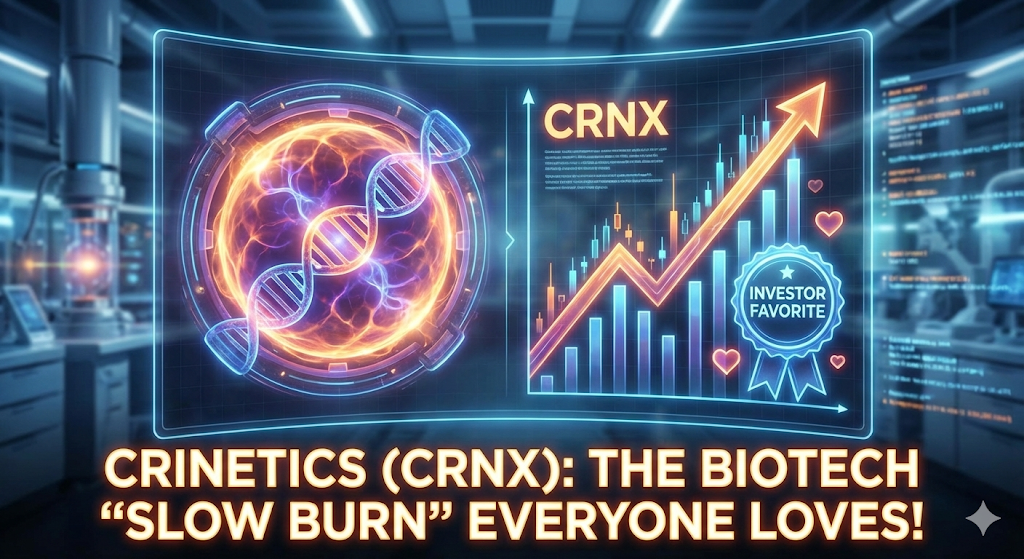
Crinetics Pharmaceuticals, Inc. (NASDAQ: CRNX) is increasingly being viewed not just as another clinical-stage biotech stock, but as a rare disease platform company that is entering a new phase of institutional validation. While short-term price movements and earnings volatility continue to dominate headlines, the deeper story unfolding beneath the surface points to a company that is steadily being accumulated by long-term capital, supported by a widening base of bullish analyst coverage, and anchored by a pipeline that targets some of the most commercially attractive niches in endocrinology.
The recent increase in ownership by Universal Beteiligungs und Servicegesellschaft mbH is not an isolated event but part of a broader trend that underscores how professional investors are positioning themselves ahead of what they see as a multi-year value creation cycle. Institutional investors now control roughly 98.5 percent of CRNX stock, a level of ownership that is rarely seen outside of companies with strong scientific credibility and long-duration growth potential. In the biotech sector, this degree of institutional concentration often signals confidence not in quarterly results, but in long-term clinical and commercial outcomes.
CHECK THIS OUT: Here’s Why Apogee Therapeutics (APGE) Is Suddenly on the Radar of Biotech Investors and Coeptis Therapeutics (COEP) Is Not Profitable Yet — and That’s Exactly Why It’s Interesting.
Institutional Accumulation Signals Conviction, Not Speculation
The decision by Universal Beteiligungs und Servicegesellschaft mbH to increase its stake in Crinetics Pharmaceuticals by 13.5 percent during the third quarter, bringing its holdings to nearly 388,000 shares valued at over $16 million, is particularly telling when viewed in context. Large European asset managers are typically conservative allocators in biotechnology, favoring companies with differentiated platforms, disciplined capital deployment, and clear regulatory paths. Their willingness to increase exposure at current valuation levels suggests that CRNX stock is increasingly being viewed as a core rare disease biotech holding rather than a speculative trade.
This accumulation is reinforced by the broader ownership structure. With hedge funds and institutional investors controlling the overwhelming majority of shares, Crinetics Pharmaceuticals has effectively moved into the hands of investors who tend to operate on multi-year timelines. Historically, this kind of ownership profile reduces downside volatility over time while amplifying upside when clinical or regulatory milestones are achieved. For long-term investors evaluating NASDAQ biotech stocks, this institutional footprint alone places CRNX in a higher-quality tier.
Analyst Sentiment Reflects Growing Confidence in the CRNX Story
Wall Street’s view of Crinetics Pharmaceuticals has become increasingly constructive, even as the company remains pre-profit and reports negative earnings per share. The current consensus rating of Moderate Buy, supported by eleven Buy ratings against just one Hold and one Sell, reflects a growing belief that the company’s intrinsic value is not being captured by near-term financial metrics.
The steady upward revision of analyst price targets tells a more important story than the consensus label itself. Goldman Sachs’ upgrade from neutral to buy, Morgan Stanley’s overweight rating with an increased target, Leerink Partners’ move toward the high end of the analyst range, and JMP Securities’ aggressive $143 price objective all suggest that different analytical frameworks are converging on the same conclusion: the long-term upside embedded in CRNX stock outweighs its near-term risks.
In biotech investing, analyst conviction often lags clinical and strategic progress. The fact that multiple firms have raised targets while the company is still reporting EPS losses highlights a forward-looking reassessment of Crinetics Pharmaceuticals’ pipeline value, commercial optionality, and platform scalability.
Insider Selling Does Not Undermine the Long-Term Thesis
Recent insider selling by executives at Crinetics Pharmaceuticals has drawn attention, but when analyzed objectively, it does little to weaken the bullish thesis. The transactions involved relatively small amounts compared to total insider holdings and appear consistent with routine diversification rather than a loss of confidence in the business. Importantly, company insiders still retain meaningful equity exposure, aligning their incentives with long-term shareholders.
In the biotech sector, insider selling following periods of strong stock performance is common and often misinterpreted. What matters more is whether insiders are exiting entirely or selling aggressively ahead of major negative catalysts. That is not the case with CRNX stock. Instead, institutional buying has far outweighed insider selling, reinforcing the notion that smart money remains committed to the company’s long-term trajectory.
Short-Term Financial Noise Masks a Long-Term Value Creation Engine
Crinetics Pharmaceuticals’ recent earnings miss and negative price-to-earnings ratio are frequently cited as concerns, but these metrics are largely irrelevant for a clinical-stage biotech company focused on rare endocrine diseases. Revenue remains minimal because the company’s value is tied not to current sales, but to future commercialization of high-value therapies addressing underserved patient populations.
The reported quarterly loss and projected full-year EPS loss reflect deliberate investment in research, clinical trials, and regulatory infrastructure. For biotech investors with experience in rare disease stocks, this pattern is familiar. Many of the sector’s most successful companies looked financially unattractive immediately before major inflection points. What separates winners from losers is not near-term profitability, but scientific differentiation and execution discipline. Crinetics Pharmaceuticals continues to demonstrate both.
A Rare Disease Platform Built for Durable Competitive Advantage
At its core, Crinetics Pharmaceuticals is a rare disease biotech company leveraging deep expertise in hormone receptor signaling and GPCR biology. Its focus on orally bioavailable small molecules targeting somatostatin, vasopressin, and related pathways is strategically significant. These mechanisms are well-validated, yet historically underserved by patient-friendly treatment options, creating a clear opportunity for differentiation.
The company’s lead program, paltusotine, exemplifies this approach by targeting acromegaly and carcinoid syndrome diarrhea with a non-peptide somatostatin receptor agonist designed to improve convenience, adherence, and long-term disease control. This focus on patient-centric innovation enhances the commercial appeal of Crinetics Pharmaceuticals’ pipeline and strengthens its positioning among rare disease biotech stocks.
Market Structure Favors Long-Term CRNX Shareholders
From a trading and ownership perspective, CRNX stock exhibits characteristics that often precede sustained long-term appreciation. The stock’s relatively low beta suggests reduced sensitivity to broader market swings, while its rising long-term moving averages indicate improving technical health. With a market capitalization exceeding $5 billion, Crinetics Pharmaceuticals has already crossed the threshold that attracts larger institutional mandates, further expanding its potential investor base.
When combined with high institutional ownership, improving analyst sentiment, and a differentiated pipeline, these market dynamics create a setup where positive clinical or regulatory developments could lead to outsized valuation re-ratings rather than incremental gains.
Why the Bullish Thesis for Crinetics Pharmaceuticals Remains Intact
Crinetics Pharmaceuticals, Inc. is not a momentum-driven biotech story built on hype. It is a methodically constructed rare disease platform company that is being validated incrementally by institutional investors, analysts, and the broader biotech ecosystem. Short-term volatility, earnings misses, and headline-driven skepticism are part of the journey for companies at this stage, but they do not define the destination.
The combination of heavy institutional ownership, rising analyst price targets, a focused endocrine disease pipeline, and a capital allocation strategy centered on long-term value creation positions CRNX stock as a compelling opportunity for investors who understand the lifecycle of successful biotech companies. As the company advances toward future clinical and commercialization milestones, the disconnect between current financial optics and long-term intrinsic value may continue to narrow in favor of patient shareholders.
READ ALSO: Could UnitedHealth Group (UNH) Be the Safest Way to Invest in Healthcare Growth? and SELLAS Life Sciences Group (SLS) Just Took a Big Step Toward Changing How Cancer Is Treated.