Few biotechnology companies illustrate the modern shift toward highly targeted, mechanism-driven drug development as clearly as the one that built its identity around precision immunology and oncology rather than broad, one-size-fits-all therapies. From its earliest days, the company was formed around the idea that understanding specific biological pathways and immune system mechanisms could unlock more effective and better-tolerated treatments for complex diseases such as cancer and autoimmune disorders. This focus on deep scientific specialization shaped not only the company’s research strategy but also its long-term corporate identity as a developer of differentiated therapies rather than a mass-market pharmaceutical manufacturer.
TG Therapeutics Inc (NASDAQ:TGTX) was founded with a deliberate emphasis on B-cell malignancies and immune-mediated diseases, areas where advances in monoclonal antibodies and targeted therapies were beginning to change treatment paradigms. The company’s early work centered on identifying and developing drug candidates that could selectively target disease-causing cells while sparing healthy tissue, a principle that reflects the broader trend toward precision medicine. This scientific orientation positioned TG Therapeutics within a new generation of biotech firms that sought to replace cytotoxic, generalized treatments with biologics and immune-modulating therapies designed around specific molecular targets.
As the company evolved, TG Therapeutics expanded its development efforts into multiple sclerosis, recognizing that autoimmune diseases offered both significant unmet medical need and long-term commercial opportunity. Multiple sclerosis is a chronic condition requiring lifelong management, making it a particularly attractive market for therapies that can offer sustained efficacy and acceptable safety profiles. By entering this space, TG Therapeutics aligned itself with a therapeutic area where scientific innovation, regulatory scrutiny, and commercial dynamics intersect intensely, shaping much of the company’s subsequent strategic direction.
Throughout its growth, TG Therapeutics built its pipeline through a combination of internal research, licensing, and strategic partnerships, reflecting a pragmatic approach to drug development in a capital-intensive industry. Rather than attempting to build every asset from scratch, the company selectively acquired or licensed promising candidates and then applied its development expertise to advance them through clinical trials. This approach allowed TG Therapeutics to remain relatively focused and efficient while still participating in cutting-edge therapeutic innovation.
The company’s progression through clinical development phases also defined its organizational capabilities and culture. Clinical trials in oncology and autoimmune disease are complex, lengthy, and expensive, requiring close coordination among researchers, clinicians, regulators, and patients. TG Therapeutics’ background reflects years of navigating this environment, developing expertise not only in science but in regulatory strategy, trial design, and global clinical operations. These capabilities are essential for any biotech company seeking to move from discovery to commercialization, and they form a core part of TG Therapeutics’ institutional knowledge.
As it transitioned from a purely development-stage company toward commercialization, TG Therapeutics began to build infrastructure beyond the laboratory, including regulatory affairs, manufacturing coordination, and commercial planning. This shift marked a turning point in the company’s evolution, as it moved from being primarily a research organization to becoming an integrated biopharmaceutical company capable of bringing therapies to market. This transformation is significant because it changes the company’s risk profile, operational complexity, and relationship with investors and healthcare systems.
The public listing of TG Therapeutics placed the company within the broader capital markets ecosystem, exposing it to both the opportunities and pressures that come with being a publicly traded biotech stock. As a result, the company’s background is not only scientific but also financial, shaped by the need to balance long-term research investment with shareholder expectations, regulatory timelines, and market sentiment. This tension between science and capital is a defining feature of modern biotechnology, and TG Therapeutics embodies that dynamic.
Today, TG Therapeutics Inc stands as a representative example of a focused biotech company built around targeted immunology and oncology, with its history reflecting the broader evolution of the industry toward precision medicine, biologics, and immune-based therapies. Its background is rooted in scientific ambition, shaped by regulatory and commercial realities, and defined by the pursuit of differentiated treatments in some of the most challenging areas of medicine. This foundation provides the context for understanding both the company’s current position and the strategic choices it continues to make as it navigates the future of biotechnology.
TG Therapeutics Is Becoming a One-Product Company in a Highly Competitive Market
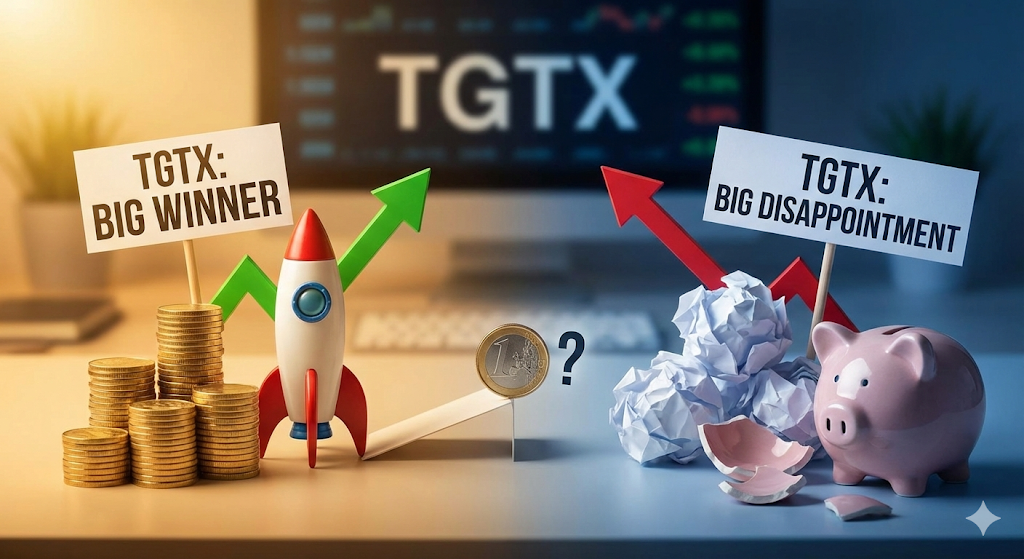
TG Therapeutics Inc has increasingly become defined not by a diversified biotechnology pipeline but by a single commercial product, Briumvi, an anti-CD20 therapy approved for multiple sclerosis. While the company’s recent presence at the 44th Annual J.P. Morgan Healthcare Conference in San Francisco and the commentary from CEO Michael S. Weiss signal management’s confidence in Briumvi’s momentum, the underlying structure of the business reveals a growing concentration risk that investors may be underestimating. As the TG Therapeutics stock narrative narrows around one drug, the company’s valuation and future performance become tightly bound to the continued success of Briumvi in an intensely competitive, payer-constrained, and innovation-heavy therapeutic area.
At the conference, management emphasized updated demand trends for Briumvi and reiterated 2026 priorities centered around expanding its footprint in multiple sclerosis, including a future subcutaneous formulation. Investors interpreted this as a sign of operational strength and commercial traction. However, the very fact that this single product dominates the company’s messaging underscores the fragility of the business model. When a biotech company’s entire growth story depends on one therapy, even modest shifts in demand, reimbursement, safety perception, or competitive dynamics can have outsized impacts on revenue, earnings, and stock price.
CHECK THIS OUT: Here’s Why Apogee Therapeutics (APGE) Is Suddenly on the Radar of Biotech Investors and Coeptis Therapeutics (COEP) Is Not Profitable Yet — and That’s Exactly Why It’s Interesting.
The Briumvi Growth Story Faces Structural Headwinds
Briumvi enters a multiple sclerosis market that is already saturated with well-established therapies from large pharmaceutical companies with entrenched physician relationships, broader sales forces, and extensive payer negotiation experience. The MS treatment landscape is crowded not only with other anti-CD20 therapies but also with oral and infusion-based alternatives that offer similar efficacy profiles with varying convenience and safety tradeoffs. This means that Briumvi’s growth is not occurring in a vacuum but in a zero-sum environment where every incremental patient gain likely comes at the expense of a competitor with significant resources.
Payer pressure is another structural challenge that threatens the durability of Briumvi’s revenue trajectory. High-cost MS therapies are under increasing scrutiny from insurers, pharmacy benefit managers, and national health systems seeking to control specialty drug spending. Even if clinical demand remains strong, net pricing and reimbursement terms can erode margins and slow revenue growth. This dynamic introduces a disconnect between unit demand and financial performance, where headline prescription growth does not necessarily translate into proportional revenue or profit expansion.
While management projects global revenue of approximately $600 million in 2025, largely driven by Briumvi, and forecasts up to $1.2 billion in revenue and $469 million in earnings by 2028, these projections implicitly assume sustained market share gains, favorable pricing, and smooth execution of future product enhancements such as the subcutaneous formulation. Each of those assumptions introduces risk. Any delay in formulation development, regulatory approval, or payer adoption could materially undermine these targets.
Valuation Optimism May Already Price in Best-Case Outcomes
The valuation debate around TG Therapeutics highlights the asymmetry between optimistic projections and downside risk. Some fair value models suggest a price target implying as much as 60 percent upside from current levels, while others indicate the stock could be worth significantly less, even 40 percent below current prices. This wide dispersion reflects deep uncertainty about the sustainability of Briumvi’s growth and the company’s ability to expand beyond its current product footprint.
When a stock’s valuation relies heavily on aggressive forward projections, the margin for error becomes thin. Any sign that Briumvi demand is plateauing, that competitive pressures are intensifying, or that pricing power is weakening could lead to rapid multiple compression. This is especially true in biotechnology, where sentiment can shift quickly based on conference commentary, prescription trends, or subtle changes in management guidance.
The recent share pullback ahead of the J.P. Morgan conference suggests that the market is already uneasy about whether the current narrative fully justifies the valuation. Even as management attempts to reinforce confidence, investors remain sensitive to any indication that growth may not meet expectations.
Strategic Concentration Limits Long-Term Optionality
A major weakness in the TG Therapeutics investment case is the lack of diversification. Unlike larger pharmaceutical companies that can absorb setbacks in one product with strength in others, TG Therapeutics has little buffer. The company’s future earnings, cash flows, and strategic flexibility are tightly linked to Briumvi’s performance. This concentration limits optionality and increases vulnerability to external shocks such as regulatory changes, competitor launches, or shifts in clinical practice.
Even the planned subcutaneous version of Briumvi does not meaningfully diversify risk, as it is essentially an extension of the same product franchise rather than a new therapeutic category. While it may improve convenience and adoption, it does not reduce reliance on the same underlying mechanism, market, and competitive set.
This structural limitation means that TG Therapeutics remains exposed not only to clinical and commercial risks but also to macro-level changes in healthcare policy, drug pricing reform, and reimbursement models that could disproportionately affect specialty drug companies with narrow portfolios.
The Narrative May Be More Fragile Than It Appears
The presentation at the J.P. Morgan Healthcare Conference was intended to reinforce the bullish case for TG Therapeutics by highlighting strong demand trends and reaffirming long-term targets. Yet from a bearish perspective, it also revealed how tightly the company’s story is bound to a single set of assumptions. The entire narrative hinges on continued Briumvi adoption, stable pricing, favorable payer relationships, and the absence of disruptive competition.
Biotechnology history is filled with examples of companies that appeared well positioned only to face unexpected challenges from new entrants, safety concerns, or shifts in treatment standards. In such an environment, confidence can be ephemeral, and valuation can reprice abruptly when expectations change.
Conclusion: A High-Risk Profile Disguised as a Growth Story
TG Therapeutics Inc is often framed as a growth biotech with a clear commercial success in Briumvi and a promising earnings trajectory. But beneath that surface lies a fragile structure defined by concentration risk, intense competition, payer pressure, and optimistic assumptions about future expansion. The stock’s appeal depends heavily on believing that Briumvi will not only sustain its current momentum but accelerate it in a crowded and increasingly cost-conscious market.
For investors who prioritize stability, diversification, and predictable cash flows, TG Therapeutics stock represents a high-risk proposition. Its future is not diversified across multiple products or markets, but instead rests on the continued success of a single drug in a challenging environment. That makes the bearish case compelling: the downside risks are concrete and numerous, while the upside depends on a narrow path of execution and favorable external conditions.
In that sense, TG Therapeutics is not just a biotech growth story but a leveraged bet on one product, one market, and one set of assumptions. And in biotechnology, those are precisely the kinds of bets that can unravel quickly when reality diverges from narrative.
READ ALSO: Could UnitedHealth Group (UNH) Be the Safest Way to Invest in Healthcare Growth? and SELLAS Life Sciences Group (SLS) Just Took a Big Step Toward Changing How Cancer Is Treated.